Introduction
What is a Strategic Interview Follow-Up?
Why a Strategic Follow-Up Can Make or Break Your Candidacy
In a sea of qualified applicants, small details make a big difference. Here’s why a thoughtful follow-up is so powerful for achieving job interview success.
It Reinforces Your Interest and Enthusiasm
Hiring managers want to hire people who are genuinely excited about the role and the company. A prompt, personalized follow-up is concrete proof of your strong interest. It tells them you’re not just passively applying to jobs, but you are actively pursuing this specific opportunity.
It Allows You to Add Value and Address Gaps
Ever leave an interview and immediately think of the perfect answer to a question? The follow-up email is your chance to shine. You can briefly mention a point you forgot to make, provide a link to a relevant portfolio piece, or clarify an answer you felt was weak. This shows initiative and depth.
It Showcases Your Professionalism and Communication Skills
A well-written, error-free email demonstrates strong written communication skills—a critical asset in almost any role. It also shows that you are organized, courteous, and understand professional etiquette. For more tips on professional development, browse the career guides at Infoinaja.
Anatomy of the Perfect Follow-Up Email
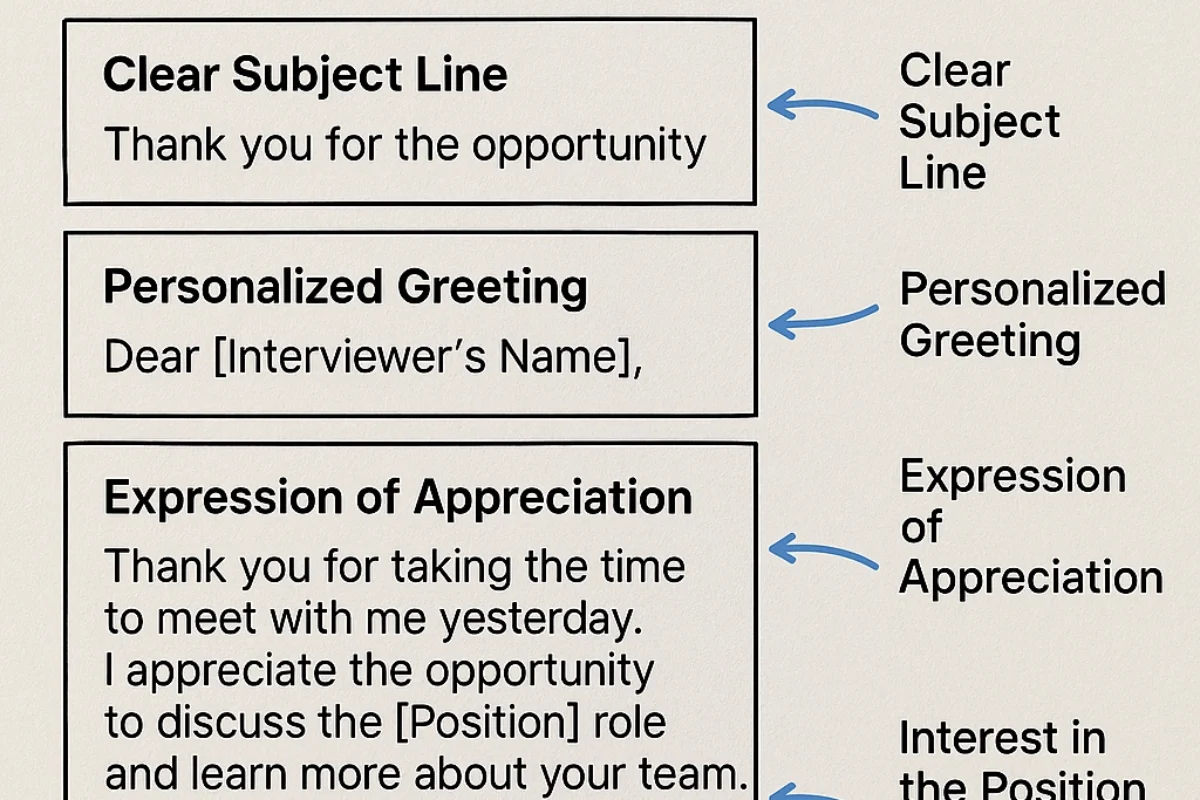
Crafting an effective follow-up email is an art. Each component has a role to play in making a positive impact.
1. The Crystal-Clear Subject Line
Your subject line needs to be instantly recognizable in a crowded inbox. Be specific and professional.
Examples: “Thank you – [Job Title] Interview”, “Following up on the [Job Title] Interview”, or “Thank you – [Your Name] & [Interviewer’s Name]”.
2. The Personalized Greeting
Address the interviewer by name. Use “Dear Mr./Ms. [Last Name]” for a formal tone, or “Hi [First Name]” if the interview was more casual and they used their first name with you.
3. The Expression of Gratitude
Start by thanking them for their time. Be specific about the position and the date of the interview. Example: “Thank you again for taking the time to speak with me yesterday about the Marketing Manager position.”
4. The Value-Add Paragraph
This is where you stand out. Reiterate your interest and connect a specific point from your conversation to your skills. Example: “I particularly enjoyed our discussion about the upcoming product launch. My experience in leading a similar launch at [Previous Company], which resulted in a 20% increase in market share, aligns directly with the goals you outlined.”
5. The Reaffirmation of Interest
Briefly restate your enthusiasm for the role. Example: “Our conversation further confirmed my interest in this opportunity and my belief that my skills would be a great asset to your team.”
6. The Professional Closing
End with a professional closing like “Sincerely,” or “Best regards,” followed by your full name and contact information (phone and LinkedIn profile link).
Follow-Up Email Templates for Any Situation
Here are some ready-to-adapt templates for your post-interview follow-up.
Template 1: Standard Post-Interview Thank-You
Subject: Thank you – [Job Title] Interview
Dear [Interviewer Name],
Thank you so much for taking the time to meet with me today to discuss the [Job Title] position at [Company Name]. I truly enjoyed learning more about the role, the team’s goals, and the company culture.
I was particularly interested in our discussion about [mention a specific topic]. My experience in [mention relevant skill or accomplishment] seems to be a direct match for the challenges you described.
I am very enthusiastic about the opportunity to join your team and contribute to your success. I look forward to hearing from you regarding the next steps.
Best regards,
[Your Name]
[Your Phone Number]
[Link to your LinkedIn Profile]
Template 2: The “Check-In” Email (If you haven’t heard back)
Subject: Following up on the [Job Title] role
Dear [Interviewer or HR Contact Name],
I hope this email finds you well.
I’m writing to follow up on my interview for the [Job Title] position on [Date of interview]. I truly enjoyed our conversation and remain very interested in the opportunity to contribute to [Company Name].
Could you please provide a brief update on the hiring timeline? I am eager to hear about the next steps.
Thank you for your time and consideration.
Sincerely,
[Your Name]
The Follow-Up Timeline: When to Send Each Message
Timing is everything. Following up too soon can seem pushy, while waiting too long can signal disinterest. Stick to this professional timeline.
- Within 24 Hours: The Initial Thank-You
Send a personalized thank-you email to each person you interviewed with. This is non-negotiable.
- The Day After the Decision Deadline: The Gentle Check-In
If the interviewer gave you a date by which you’d hear back, wait until the following business day to send a polite check-in email (use Template 2).
- One Week After the Deadline: The Final Follow-Up
If you still haven’t heard anything, you can send one final, brief email. Reiterate your interest and state that you understand they are busy, but you’d appreciate any update. After this, it’s time to move on and focus on other opportunities.
Common Follow-Up Mistakes That Can Cost You the Job
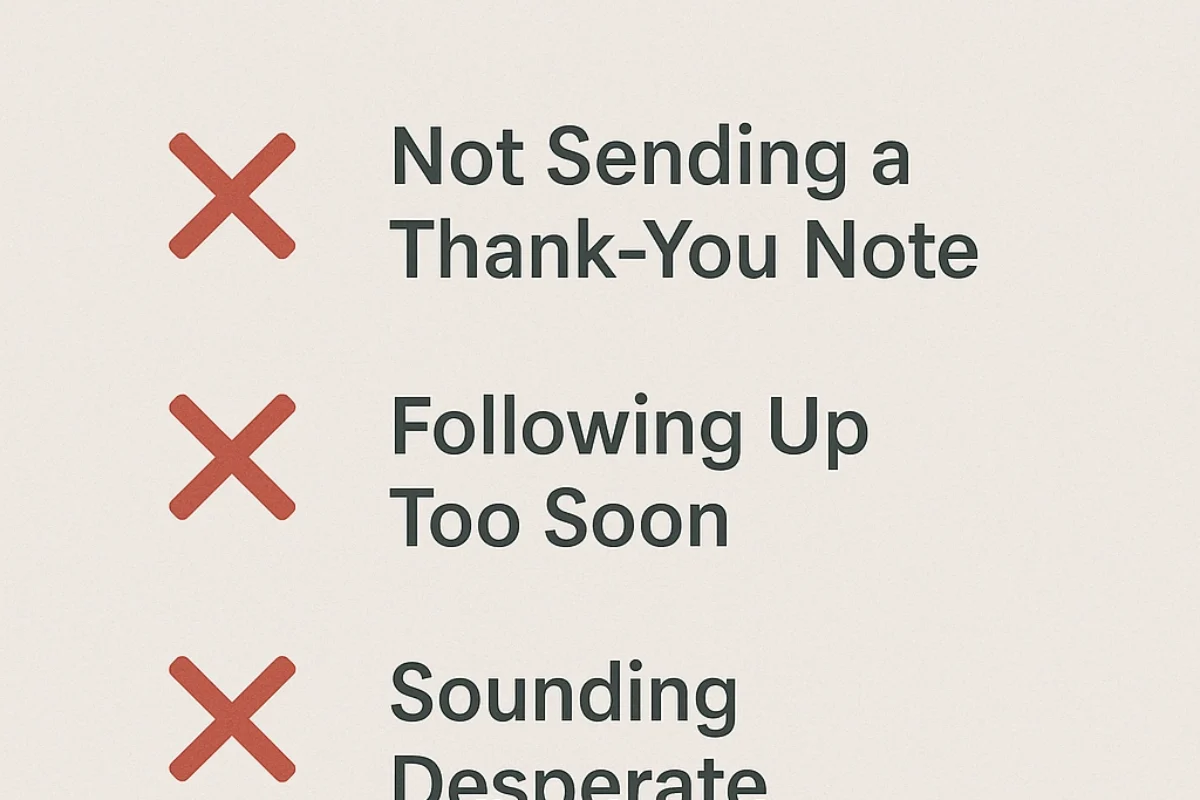
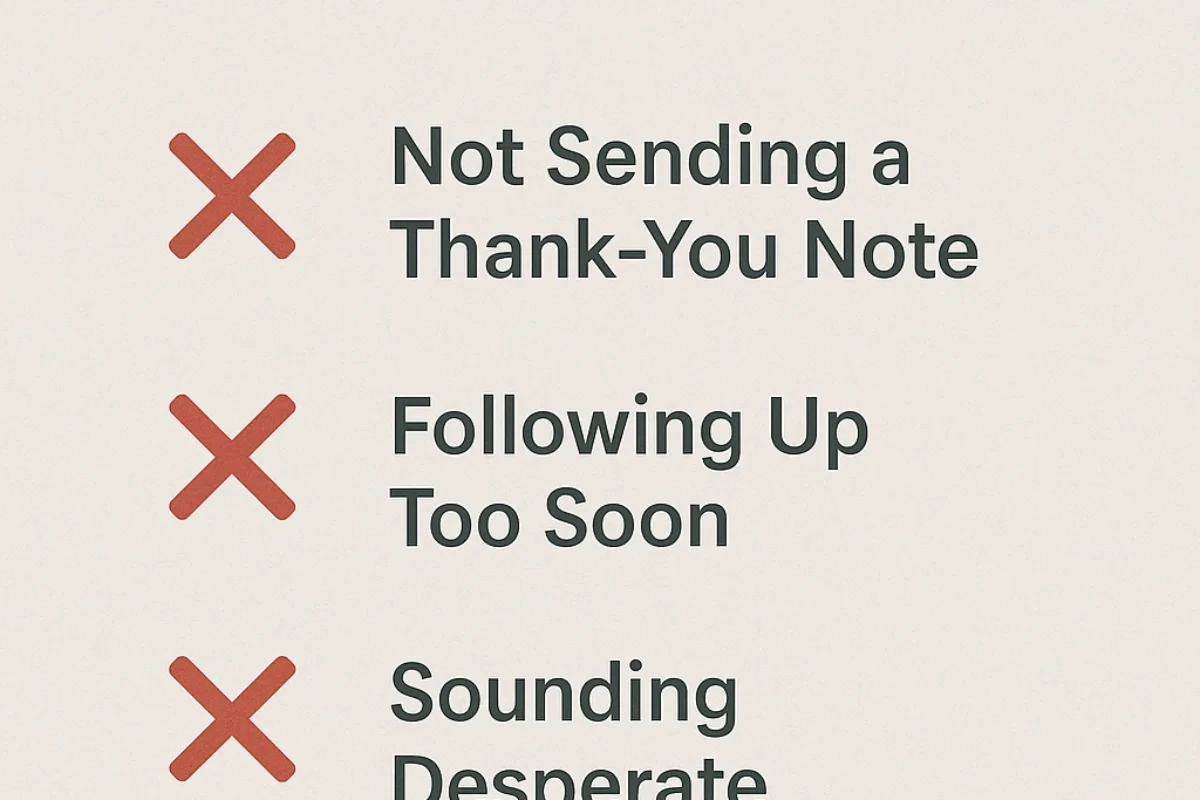
- Sending a Generic, Copied-and-Pasted Email: Interviewers can spot a generic template from a mile away. Always mention something specific from your conversation.
- Typos and Grammatical Errors: This is a professional communication. A sloppy email can undo all the hard work you did in the interview. Proofread it twice.
- Following Up Too Aggressively: Bombarding the hiring manager with daily emails or calls is the fastest way to get your application moved to the “no” pile. Respect their time and the process.
- Being Too Casual: Even if the interview was friendly, maintain a professional tone in your written communication. Avoid slang, emojis, or overly casual language.
- Asking About Salary or Benefits: The follow-up email is not the place to bring up compensation. This should be reserved for conversations with HR or when an offer is being extended.
- Replying to a Group Email: If you interviewed with multiple people, send an individual, personalized email to each person. Don’t send one group email.
Expert Tips & Best Practices
- Connect on LinkedIn: Send a personalized connection request to your interviewers on LinkedIn within 24 hours. It’s a great way to build a professional connection.
- Reference a Company News Article: To really impress, find a recent news article, press release, or blog post about the company and mention it in your follow-up. Example: “I was excited to read the recent TechCrunch article about your new product line…”
- Keep a Record: Use a spreadsheet to track your applications, interview dates, and follow-up actions. This organization is key when you’re managing multiple opportunities.
- Prepare for the “Thank You” Call: In some cases, a recruiter might call to gauge your continued interest. Be prepared to express your enthusiasm and ask about the next steps.
“A great interview follow-up doesn’t just say ‘thank you,’ it continues the conversation. It’s the candidate’s last chance to prove they were listening and to connect their skills directly to the company’s immediate needs,” notes HR consultant Maria Rodriguez.
Frequently Asked Questions (FAQ)
Q: How soon after an interview should I send a follow-up email?
A: You should send your initial thank-you email within 24 hours of the interview. This timing shows that you are prompt, organized, and genuinely interested in the position. Sending it too soon can seem desperate, while waiting longer than a day diminishes its impact.
Q: Is it okay to follow up more than once?
A: Yes, but it must be done strategically. After your initial thank-you note, it’s acceptable to send a brief check-in email if you haven’t heard back by the deadline the interviewer provided. A final, polite check-in can be sent a week or so after that. Any more than three follow-ups can be seen as pestering.
Q: Should I connect with my interviewer on LinkedIn?
A: It’s generally a good idea to send a connection request on LinkedIn within a day of the interview. Accompany the request with a personalized note mentioning the interview. It’s a professional way to stay on their radar and show your initiative.
Q: What should I do if I don’t hear back after a final interview?
A: If you haven’t heard back by the date they said they’d be in touch, wait one or two business days before sending a polite follow-up. In your email, reiterate your interest and ask if there are any updates on the timeline. Keep it brief and professional.
Q: Is a handwritten thank-you note better than an email?
A: While a handwritten note can be a memorable touch in very traditional industries (like law or finance), it’s generally not recommended in 2025. Email is faster, more efficient, and ensures your message is received promptly. A handwritten note can take days to arrive, by which time a hiring decision may have already been made.
Q: Should I follow up after receiving a rejection email?
A: Yes, a brief and gracious response can leave a lasting positive impression. Thank them for the opportunity and their time, and express your interest in future opportunities. This professional courtesy can keep you in their talent pool for other Statista’s HR reports.
Conclusion
The way you handle your interview follow-up is a clear reflection of your professionalism and genuine interest in the role. Effective interview follow-up goes beyond a simple thank-you note and turns this step into a strategic advantage. A thoughtful interview follow-up, sent promptly and with added value, keeps the conversation alive and highlights your engagement and qualifications. Mastering the interview follow-up can make the difference between being remembered and being hired, playing a key role in your overall job search success.