
Elevate your online personal brand with our guide to social media branding. Learn to choose platforms, create content, and engage your audience for career growth.
Introduction
In 2025, your resume isn’t just a piece of paper—it lives across your online profiles. Recruiters are evaluating your presence constantly, making social media branding an essential part of how you’re perceived. Without intentional social media branding, your accounts may send the wrong message or miss opportunities to highlight your expertise. By embracing strategic social media branding, you can turn scattered posts into a cohesive professional narrative that strengthens your personal brand, attracts meaningful opportunities, and positions you as a trusted authority in your industry.
What is Social Media Branding?
Social media branding is the continuous process of creating and distributing content across social platforms to shape the public’s perception of you. It’s about intentionally managing your narrative to showcase your expertise, values, and unique personality. It’s not about pretending to be someone you’re not; it’s about being strategic in how you present your authentic self to the world. In an age where the creator economy is booming and individual experts often have more credibility than corporate logos, social media has become the primary stage for building a professional reputation. As a key component of your online personal brand, it’s how you go from being just another name on a list to a recognized and respected voice in your industry.
Why a Strategic Social Media Presence is a Career Superpower
Ignoring social media is like showing up to a networking event and standing silently in the corner. Here’s why active participation is crucial.
Build a Network and Community at Scale
Social media allows you to connect with industry leaders, peers, and potential mentors from all over the world, breaking down geographical barriers. By consistently engaging and providing value, you don’t just build a list of contacts; you cultivate a community that supports your career growth.
Show, Don’t Just Tell, Your Expertise
A resume *tells* people you have a skill. Social media allows you to *show* it. By sharing case studies, writing insightful posts about your industry, or creating tutorials, you provide tangible proof of your expertise. This builds credibility far more effectively than a simple bullet point on a CV.
Control Your Own Narrative
If you don’t define your brand, others will. An active social media presence allows you to be the primary source of information about yourself. It gives you a platform to share your wins, discuss your passions, and showcase your personality, ensuring that when someone Googles you, they find the professional story you want to tell. For more on this, check out our guide to managing your online reputation.
A 5-Step Framework for Effective Social Media Branding
A strong brand doesn’t happen by accident. Follow this strategic framework for a focused and effective approach.
Step 1: Define Your Niche and Audience
Who are you trying to reach? You can’t create compelling content if you don’t know who you’re talking to. Define your target audience (e.g., tech recruiters, potential freelance clients, marketing VPs) and identify their pain points and interests. At the same time, clarify your niche. What is the specific expertise you want to be known for?
Step 2: Choose Your Platforms Wisely
Don’t stretch yourself thin trying to be on every platform. Choose one or two platforms where your target audience is most active. For most professionals, this means starting with LinkedIn. If you’re in a more visual field, Instagram or Pinterest might be appropriate. For those in tech or media, Twitter/X is a must.
Step 3: Optimize Your Profiles for Your Brand
Your social media profile is your digital storefront. Ensure it’s consistent across all platforms. This includes a professional headshot, a custom banner image, and a bio that clearly and concisely states who you are, who you help, and what you do, using keywords relevant to your niche.
Step 4: Develop a Consistent Content Strategy
Your content is the engine of your brand. Plan what you’re going to post. A good content strategy includes a mix of formats (text, images, video) and themes (educational, insightful, personal stories). The key is consistency. Create a simple content calendar to plan your posts and aim for a sustainable posting schedule (e.g., 2-3 times a week).
Step 5: Engage Authentically with Your Community
Social media is a two-way street. Don’t just post and ghost. Spend time each day responding to comments on your posts and leaving thoughtful comments on others’ content. This engagement is what builds relationships and transforms followers into a loyal community.
Comparison: Choosing the Right Platform for Your Brand
Different platforms play unique roles in your social media branding strategy. Understanding each platform’s strengths is key to effective social media branding. By tailoring your content and engagement to the right platform, you enhance your social media branding impact. A thoughtful approach to platform selection ensures your social media branding efforts reach the right audience and strengthen your professional presence.
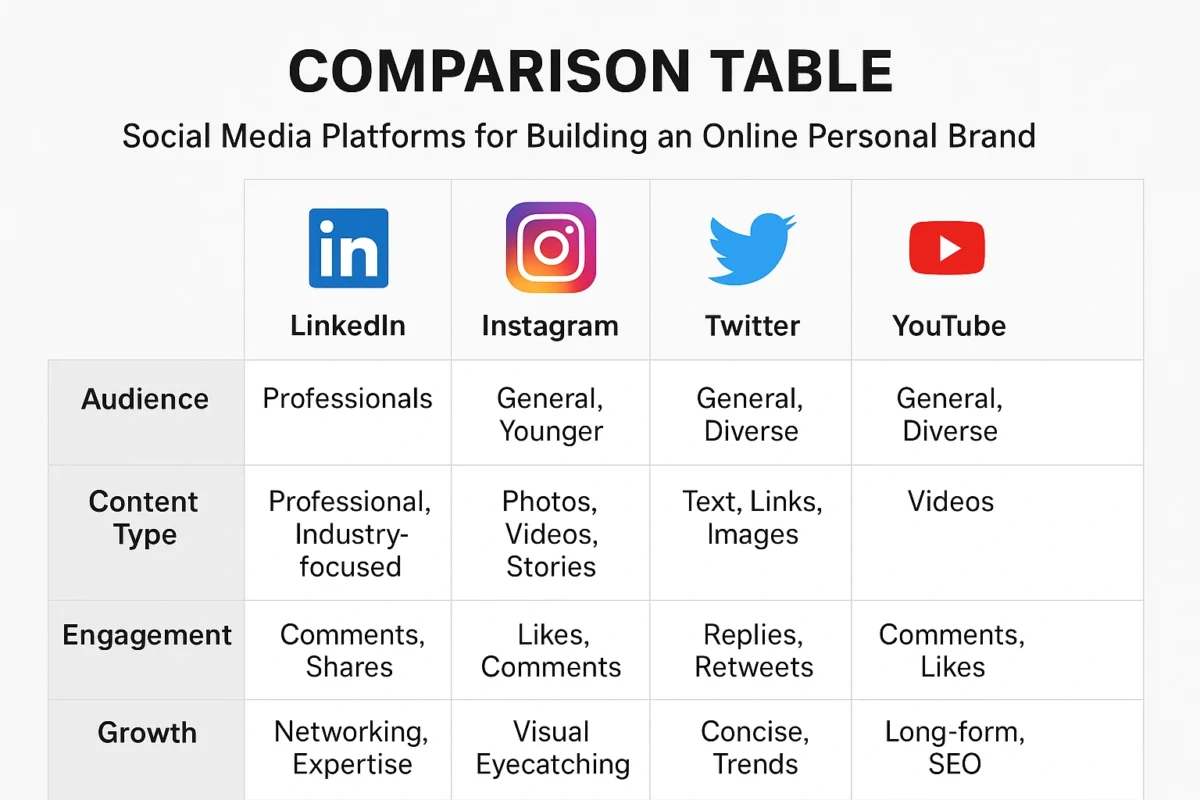
| Platform | Primary Audience | Best For |
|---|---|---|
| B2B professionals, recruiters, corporate decision-makers. | Building professional authority, networking, job searching, and B2B lead generation. | |
| Twitter / X | Tech industry, journalists, media, entrepreneurs. | Sharing real-time insights, engaging in industry conversations, and building a public voice. |
| B2C brands, creatives, coaches, lifestyle experts. | Visual storytelling, showcasing a portfolio (design, photography), building a strong community through a personal connection. |
Common Social Media Branding Mistakes to Avoid
- The One-Size-Fits-All Approach: Cross-posting the exact same content across all platforms without tailoring it to the specific audience and format of each.
- Inconsistent Activity (The Yo-Yo): Posting intensely for one week and then disappearing for a month. Consistency is crucial for algorithm visibility and audience trust.
- Only Broadcasting, Never Engaging: Using social media as a megaphone to only talk about yourself. The “social” part is key; you must engage with others.
- Buying Followers or Engagement: This is a vanity metric that provides no real value and can damage your credibility and get your account penalized.
Expert Tips & Best Practices
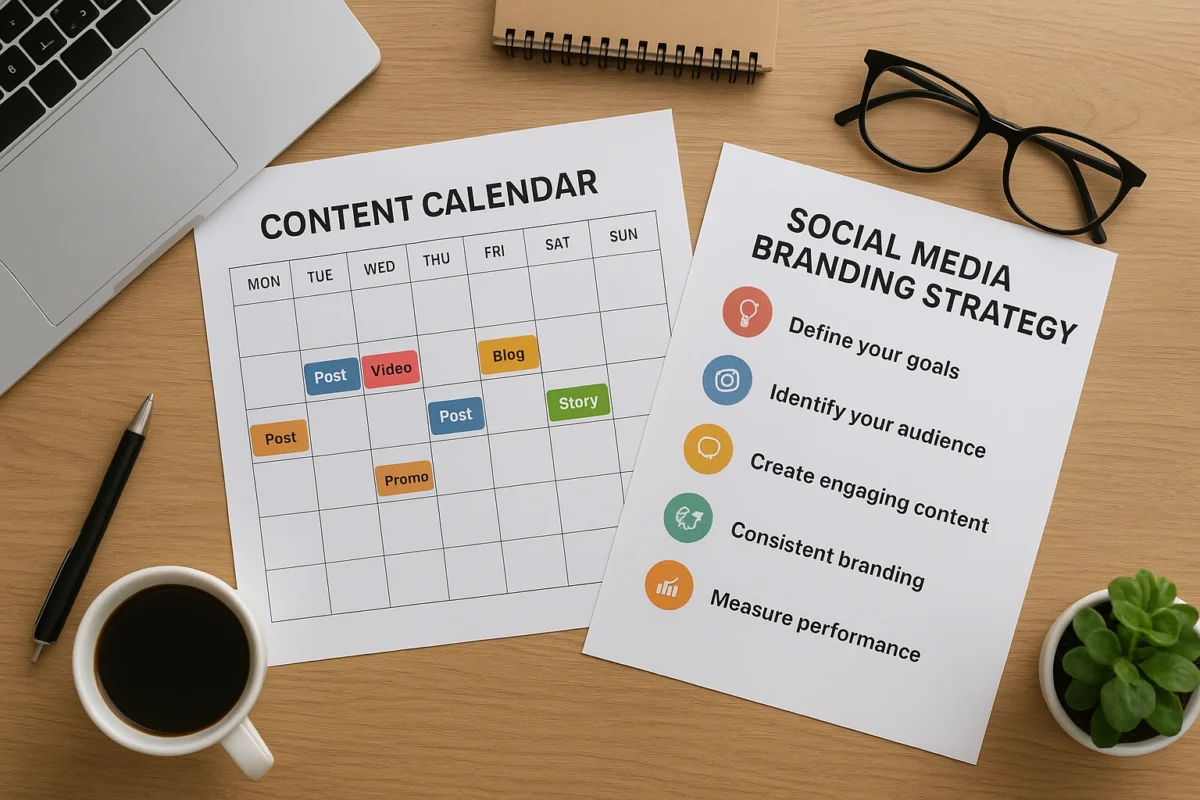
- Use a Content Pillar Strategy: Choose 3-5 core topics (pillars) for your brand. All your content should relate to these pillars. This keeps your brand focused and consistent.
- Leverage the Power of Storytelling: People connect with stories, not just facts. Share personal anecdotes, challenges you’ve overcome, and lessons you’ve learned. This makes your brand more relatable and memorable.
- Create a “Value-First” Mindset: Before you post anything, ask yourself: “Is this genuinely helpful or interesting to my target audience?” If not, don’t post it.
“In 2025, the most successful personal brands are not the most polished; they are the most authentic and generous. Your goal should be to become the most helpful person in your niche,” says a social media strategist quoted in Forbes.
Frequently Asked Questions (FAQ)
Q: How many social media platforms should I focus on for my personal brand?
A: It’s far more effective to master one or two platforms where your target audience is most active than to have a mediocre presence on five or six. Start with one core platform (like LinkedIn for most professionals) and build a consistent presence there before expanding. Quality over quantity is the key.
Q: What is the best type of content to post for personal branding?
A: The best content provides value to your target audience. A healthy mix includes: 1) Educational content that teaches something (how-to’s, tips), 2) Insightful content that shares your unique perspective on industry trends, and 3) Personal content that tells stories and reveals your authentic personality. Video and carousel posts generally receive the highest engagement.
Q: How do I get more followers and connections?
A: Focus on engagement, not just posting. Spend 15-30 minutes a day leaving thoughtful comments on other people’s posts within your niche. This increases your visibility, demonstrates your expertise, and naturally attracts relevant followers and connections. Consistently providing value is the best growth hack.
Q: Can my private social media accounts hurt my online personal brand?
A: Yes, they can. Even with private settings, screenshots can be taken and shared. It’s crucial to either keep personal accounts strictly professional or ensure your privacy settings are airtight. A good rule is to never post anything on any account that you wouldn’t be comfortable with a potential employer seeing.
Q: Is it okay to automate my social media posts?
A: Automating or scheduling posts using tools like Buffer or Hootsuite is a great way to maintain consistency. However, you should never automate engagement. Replying to comments and messages should always be done manually and authentically to build real relationships with your Wired.
Conclusion
Strategic social media branding connects your professional expertise with the people who need it most. Effective social media branding helps you define your message, choose the right platforms, and create content that resonates with your audience. By consistently practicing social media branding, you can build a reputation that opens doors and attracts opportunities. Embracing social media branding allows you to control your narrative, share your value authentically, and create a personal brand that not only gets noticed but remembered.