Introduction
What Exactly is a Personal Brand?
Why a Strong Personal Brand is Your Ultimate Career Asset
Investing time in your personal brand pays dividends throughout your entire career.
Attract Opportunities, Don’t Chase Them
A strong, visible brand acts like a magnet for opportunities. Recruiters will find you on LinkedIn for unlisted jobs, conference organizers will invite you to speak, and potential clients will seek out your expertise. It shifts your career from a reactive hunt to a proactive state of attraction.
Build Trust and Credibility at Scale
When you consistently share valuable content and insights in your area of expertise, you build a reputation as a trusted authority. This credibility makes it easier to win clients, lead teams, and get buy-in for your ideas. People are more likely to trust and work with someone whose expertise is visible and proven.
Increase Your Professional Visibility and Network
A clear brand makes you memorable. It gives people an easy way to understand what you do and who you can help. This clarity makes it easier for your network to refer opportunities to you, amplifying your reach far beyond your immediate connections. For more tips on career growth, check out the resources at Infoinaja.
How to Build Your Personal Brand: A 5-Step Guide
Building a brand is a strategic process. Follow these five core steps to create a brand that is authentic, memorable, and effective.
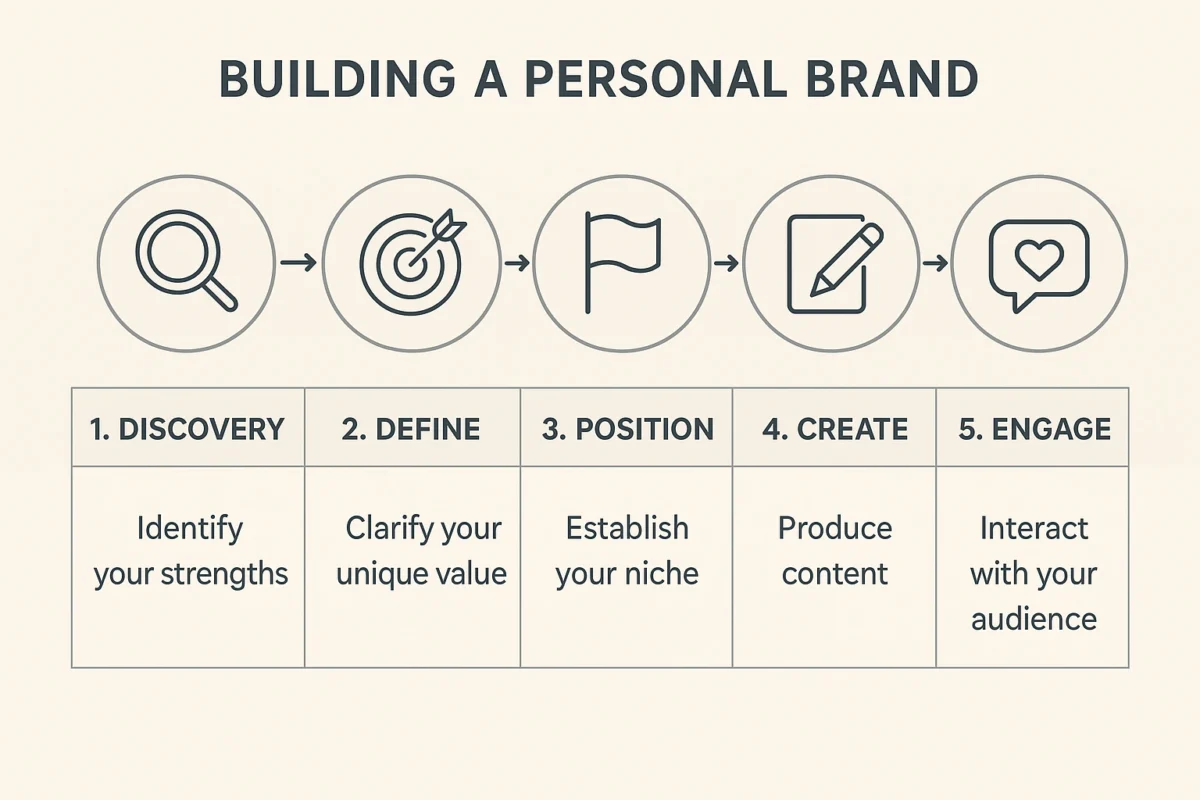
Step 1: Define Your Niche and Expertise (The Foundation)
You can’t be known for everything, so you must choose what you want to be known for. Find the intersection of three things:
- What are you passionate about? What could you talk about for hours?
- What are you skilled at? What do people consistently ask you for help with?
- What does the market value? Is there a demand for this expertise?
Your niche is where these three circles overlap. Being a “marketing expert” is too broad. Being an “expert in SEO for B2B SaaS companies” is a powerful, specific brand.
Step 2: Craft Your Core Message and Story
Once you have your niche, you need a compelling way to talk about it. This is your brand story. It should answer the questions: Who are you? What do you do? Who do you help? And how do you do it differently? Condense this into a concise “brand statement” or bio that you can use across all your profiles. For example: “I help early-stage startups achieve product-market fit through data-driven marketing strategies.”
Step 3: Choose Your Platforms and Optimize Your Profiles
You don’t need to be everywhere. Choose one or two platforms where your target audience (potential employers, clients, or collaborators) spends their time. Then, optimize your profiles on those platforms. This means a professional headshot, your clear brand statement in the bio, and a consistent username or handle.
Step 4: Create and Share Valuable Content Consistently
This is the most important step. Content is how you demonstrate your expertise and build credibility. Your content should be valuable to your target audience—it should solve their problems, answer their questions, or offer a unique perspective. The key is consistency. It’s better to post one high-quality article on LinkedIn every week than to post seven low-quality updates in one day and then disappear for a month.
Step 5: Engage and Network Authentically
Building a brand is not a monologue; it’s a conversation. Don’t just post your own content. Spend time engaging with others in your industry. Leave thoughtful comments on their posts, answer questions in online communities, and share other people’s valuable content. This builds relationships and makes you a visible, helpful member of your professional community.
Comparison: Choosing Your Primary Branding Platform
The platform you choose will shape your content and strategy. Here’s a look at the top contenders.
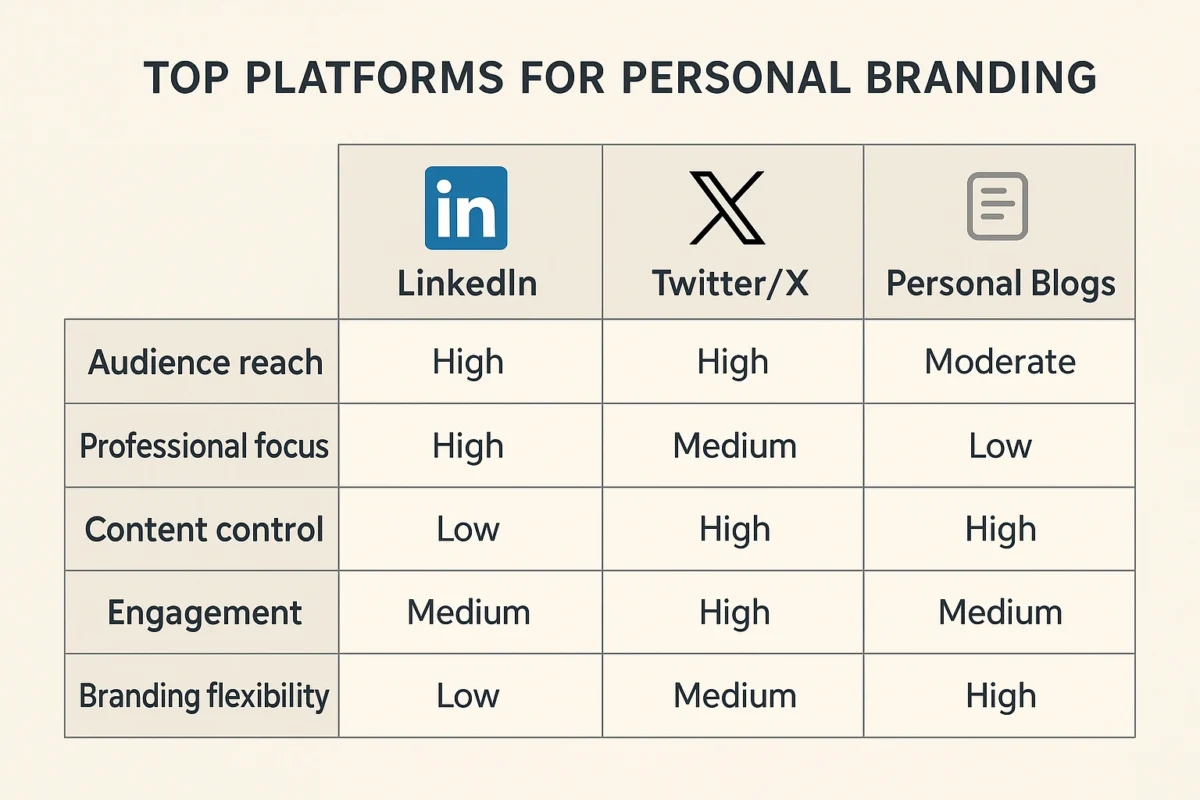
| Platform | Content Type | Best For |
|---|---|---|
| Professional articles, text posts, career updates, case studies. | B2B professionals, consultants, job seekers, corporate leaders. The undisputed king of professional branding. | |
| Twitter / X | Short-form insights, threads, links to articles, engaging in real-time conversations. | Tech professionals, writers, journalists, and anyone in a fast-moving industry where real-time news is key. |
| Personal Blog / Website | Long-form articles, portfolio, tutorials, case studies. | Anyone serious about their brand. It’s your owned media hub that gives you full control and serves as a central point for all your content. |
Common Personal Branding Mistakes to Avoid
- Being Inconsistent: Using a different headshot, bio, or tone of voice across different platforms. Consistency builds recognition and trust.
- Trying to Be Someone You’re Not: Authenticity is key. People connect with real people. Don’t try to create a brand persona that you can’t sustain.
- Making It All About You: Your content should be focused on providing value to your audience, not just on self-promotion. Follow the 80/20 rule: 80% value for your audience, 20% promotion.
- Expecting Overnight Success: A strong brand is built through consistent effort over time. Don’t get discouraged if you don’t see massive results in the first few months.
- Neglecting Your “Digital Dust”: Forgetting to Google yourself to see what comes up. Your brand is not just what you create, but also what others say about you.
Expert Tips & Best Practices
- Conduct a Personal Brand Audit: Before you start, search your name on Google and social media. What do you find? This gives you a baseline and shows you what you need to clean up or build upon.
- Get a Professional Headshot: Your profile picture is the face of your brand. A clear, high-quality, professional headshot is a non-negotiable investment.
- Ask for Testimonials: Don’t be afraid to ask colleagues or clients for recommendations on LinkedIn or testimonials for your website. Social proof is incredibly powerful.
“Your personal brand is not just about what you post, but the value you create and the community you build. Focus on being generously helpful, and your reputation will build itself,” advises a marketing expert from Wired magazine.
Frequently Asked Questions (FAQ)
Q: How long does it take to build a personal brand?
A: Building a meaningful personal brand is a marathon, not a sprint. While you can establish your foundational elements (niche, messaging, profiles) in a few weeks, it typically takes 6-12 months of consistent effort in content creation and networking to see significant results in terms of professional visibility and inbound opportunities.
Q: Do I need a personal website to have a strong personal brand?
A: While not strictly necessary at the very beginning, a personal website is highly recommended. It acts as your central, owned hub online where you can showcase your portfolio, blog, and testimonials without being subject to the changing algorithms of social media platforms. It’s the ultimate home base for your brand.
Q: How can I build a personal brand if I’m an introvert?
A: Personal branding is perfect for introverts! It allows you to build influence through thoughtful, written content rather than constant in-person networking. Focus on platforms like a personal blog, LinkedIn, or Twitter/X where you can share your expertise through writing. Quality content and meaningful one-on-one digital interactions can be more powerful than being the loudest person in the room.
Q: What if I’m just starting my career and don’t have ‘expertise’?
A: Your brand can be about your journey of learning. Document what you are learning in public. Share your projects, your challenges, and your insights as you go. This ‘learn-in-public’ approach builds an authentic brand and attracts an audience that wants to grow alongside you. Your expertise is your unique perspective on your learning journey.
Q: How do I choose the right social media platform for my personal Statista?
A: Go where your target audience lives. If you’re in a professional B2B industry, LinkedIn is essential. If your niche is highly visual (e.g., design, food), Instagram or Pinterest are key. For tech, news, and quick insights, Twitter/X is powerful. It’s better to master one or two platforms where your audience is active than to be average on all of them.
Conclusion
Building a personal brand is no longer an optional, ego-driven exercise; it is essential for boosting your professional visibility. It involves actively shaping your professional narrative in a crowded digital world. By defining your niche, sharing valuable content, and engaging with your audience, you strengthen your professional visibility and make yourself more recognizable in your industry. Consistent effort on your personal brand builds long-term professional visibility, attracting opportunities and connections that align with your goals. Start small, stay authentic, and remember: the best time to invest in your professional visibility was when you started your career, the second-best time is today. For more insights on reputation and professional visibility in the digital age, explore trusted reports from sources like Statista.