
Did you know that the World Economic Forum estimates that 50% of all employees will need to update their Professional skills by 2025? The degree you earned, the certifications you celebrated, and the Professional skills that got you your current job all have a shorter shelf-life than ever before. In a world of rapid technological advancement and economic change, neglecting to maintain your Professional skills is a choice—and a risky one at that. Continuously developing your Professional skills ensures that you remain adaptable, relevant, and prepared for future opportunities.
Your long-term success no longer depends on what you know, but on how fast you can learn, adapt, and grow. This guide is your roadmap to building a future-proof set of professional skills. We will break down the critical blend of hard and soft skills needed to thrive, not just survive, in the modern workplace. This is your essential checklist for effective career development in 2025 and beyond.
What Are Professional Skills in the Age of AI?
In the past, professional skills were often seen as a fixed set of technical abilities, or “hard skills,” required for a specific job. An accountant needed to know accounting software; a graphic designer needed to know Photoshop. While these technical skills are still crucial, their value is changing. The rise of AI and automation means that purely technical, repetitive tasks are increasingly being handled by machines.
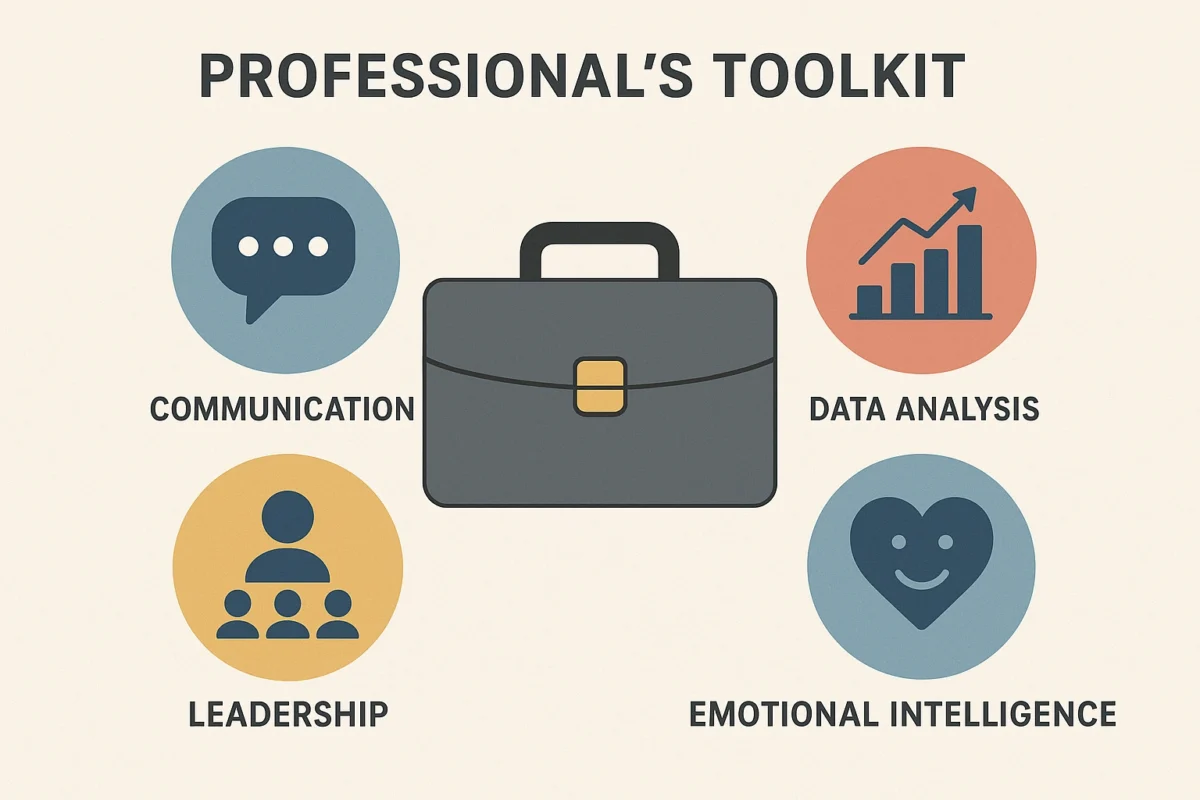
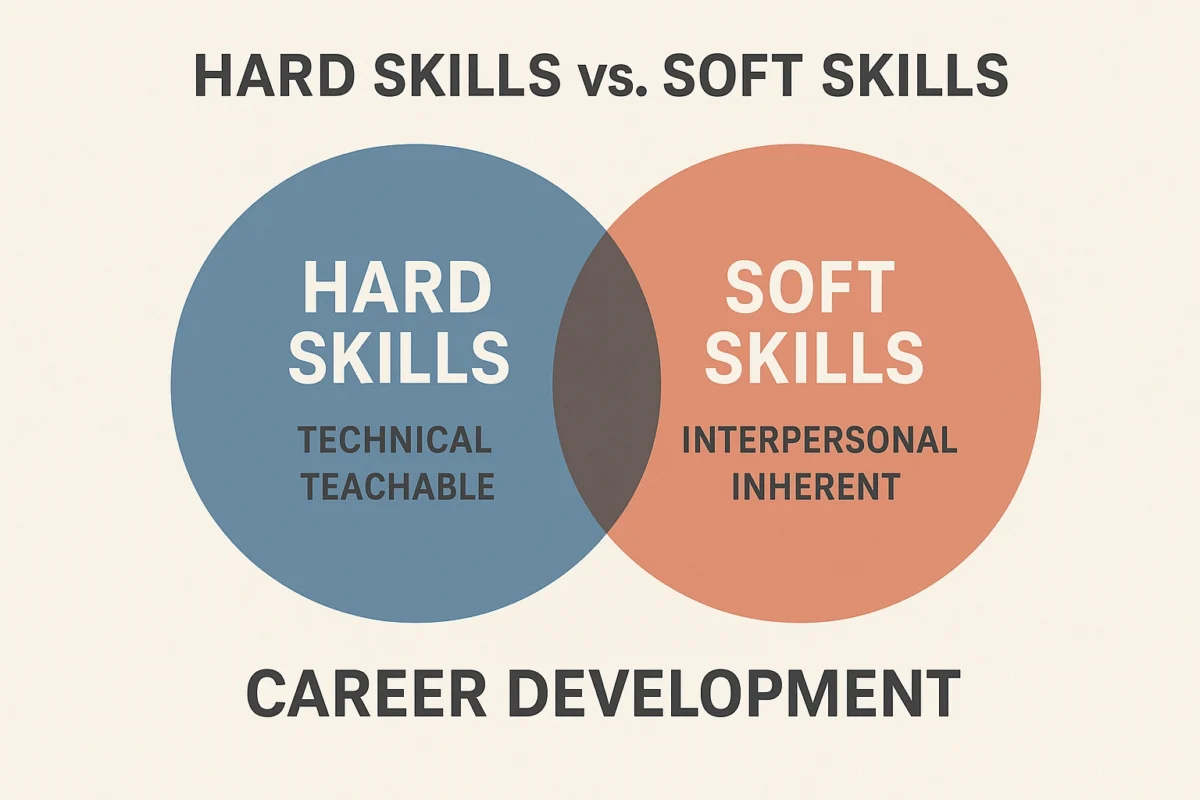
The modern definition of professional skills is a dynamic blend of durable “soft skills” (like communication and critical thinking) and adaptable “hard skills” (like data analysis and digital literacy). According to a report by McKinsey, demand for higher cognitive skills, social and emotional skills, and technological skills is projected to grow significantly, while demand for physical and manual skills will decline. It’s no longer enough to be good at your job; you must be good with people, problems, and technology.
Why Mastering These Skills is Non-Negotiable
Investing in your skill set is the single best investment you can make in your career.
1. Boost Your Adaptability and Resilience
A versatile skill set acts as a career insurance policy. When your industry pivots or your role is automated, having a foundation of adaptable skills allows you to transition smoothly to new challenges rather than becoming obsolete.
2. Enhance Your Leadership and Influence
Leadership is not about a title; it’s about influence. Strong soft skills—like emotional intelligence and communication—are what separate managers from true leaders. They enable you to motivate teams, navigate complex social dynamics, and drive meaningful change.
3. Increase Your Job Security and Earning Potential
Professionals with a blend of in-demand hard and soft skills are a rare and valuable commodity. They are less likely to be laid off during downturns and are better positioned to command higher salaries and negotiate for better opportunities. For more insights on this, you can visit InfoinAja.
The Essential Skills Checklist for 2025
We’ve broken down the must-have skills into two categories: the adaptable hard skills that tell people *what* you can do, and the timeless soft skills that show people *how* you do it.
Key Hard Skills to Master
These are the practical, technical skills that form the foundation of your contribution.
- Data Literacy: You don’t need to be a data scientist, but you must be able to understand, interpret, and make decisions based on data. This is the new language of business.
- Digital Fluency: This goes beyond knowing how to use Microsoft Office. It means mastering modern collaboration tools (like Slack, Asana, Notion), understanding cloud computing basics, and being comfortable with project management software.
- AI and Automation Literacy: Understand the basics of what AI can do for your role and industry. Knowing how to use AI tools to augment your work is rapidly becoming a key differentiator.
Timeless Soft Skills to Cultivate
These are the human-centric skills that AI cannot replicate.
- Emotional Intelligence (EQ): The ability to understand and manage your own emotions, and to recognize and influence the emotions of others. It is the bedrock of teamwork, leadership, and client relationships.
- Critical Thinking and Complex Problem-Solving: The ability to break down complex problems, evaluate information from multiple sources, and devise effective solutions.
- Communication and Storytelling: The skill of conveying complex ideas clearly, concisely, and persuasively. Whether in an email, a presentation, or a team meeting, storytelling makes your ideas stick.
- Adaptability and Learning Agility: The ability and willingness to learn from experience and then apply that learning to perform successfully in new situations. This is the meta-skill that fuels all other skill development.
How to Actively Develop Your Professional Skills
Skill development isn’t passive. It requires a deliberate, proactive approach.
| Method | Description | Best For |
|---|---|---|
| Online Courses | Structured learning paths on platforms like Coursera, edX, and LinkedIn Learning. | Acquiring specific hard skills (e.g., a programming language, a data visualization tool). |
| Mentorship | Gaining insights and guidance from a more experienced professional. | Developing soft skills, gaining industry wisdom, and navigating career politics. |
| Side Projects | Applying your skills to a personal project outside of work. | Gaining practical, hands-on experience and building a portfolio. |
| Workshops & Seminars | Intensive, focused training sessions on a single topic. | Deepening existing knowledge or getting a rapid introduction to a new skill. |
Common Mistakes to Avoid in Your Skill Development
- Passive Learning: Watching a video course is not the same as applying the knowledge. True learning happens through doing, failing, and iterating.
- The “Tool Trap”: Focusing so much on learning a specific software tool that you neglect the underlying principles. Tools change, but principles endure.
- Hiding Your Skills: It’s not enough to have a skill; you must be able to demonstrate it. Update your LinkedIn, resume, and portfolio as you learn.
- Ignoring Feedback: Actively seek constructive criticism on your work and your approach. Feedback is a gift that accelerates growth.
Expert Tips & Best Practices
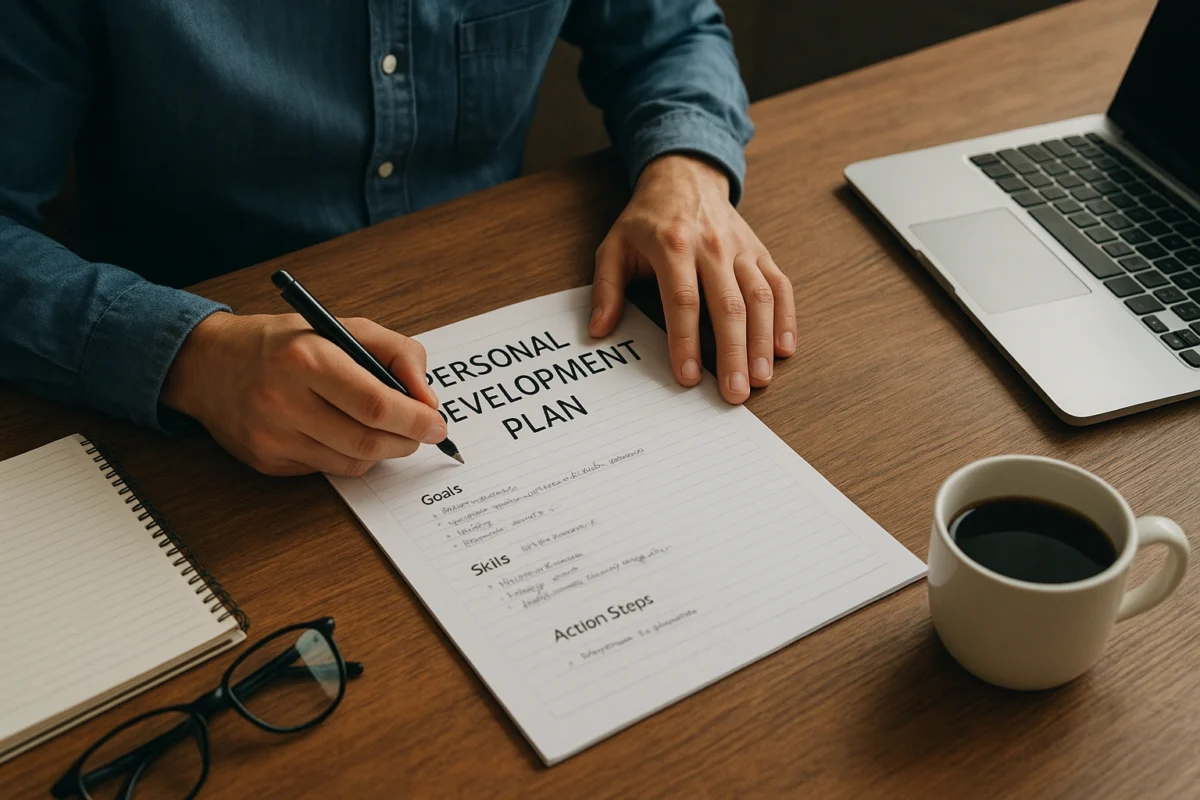
“Create a ‘Personal Development Plan’ each year,” advises a top career strategist. “Identify 1-2 hard skills and 1-2 soft skills you want to improve. Then, for each one, define what ‘good’ looks like and what specific actions you will take to get there. What gets scheduled gets done.”
- Use the 5-Hour Rule: Dedicate at least five hours a week to deliberate learning. This was a habit of leaders like Benjamin Franklin and Bill Gates.
- Teach What You Learn: The best way to solidify your understanding of a topic is to explain it to someone else. Write a blog post, give a presentation, or mentor a junior colleague.
- Seek Projects That Scare You: Volunteer for assignments at work that are just outside your comfort zone. This is where the most rapid growth occurs.
Frequently Asked Questions (FAQ)
What are more important: hard skills or soft skills?
This is a false dichotomy. The most effective professionals have a ‘T-shaped’ skill set: deep expertise in a specific hard skill (the vertical bar) and a broad understanding of various soft skills (the horizontal bar). Hard skills might get you an interview, but soft skills get you the job, the promotion, and the ability to lead.
How can I develop new skills if I have no budget?
There are numerous free resources available. You can read industry blogs, follow experts on social media, find mentors, contribute to open-source projects, and volunteer. Platforms like YouTube and Coursera also offer many free courses or audit tracks. The biggest investment is your time and commitment.
How often should I be learning new skills?
Career development is a continuous process. You should adopt a mindset of lifelong learning. A good practice is to set aside a few hours each week for learning and to conduct a more formal review of your skills every 6-12 months to align with your career goals and industry trends.
What’s the best way to showcase professional skills on a resume?
Don’t just list them. Integrate them into your experience bullet points. Instead of a section that says ‘Skills: Communication,’ write an accomplishment like: ‘Communicated complex data findings to non-technical stakeholders, leading to a 15% improvement in project efficiency.’ This provides proof of your abilities.
Can I develop these skills without a formal degree?
Yes, absolutely. While formal education provides a strong foundation, all of the skills listed in this article can be developed and mastered through self-study, online learning, mentorship, and practical application in personal or professional projects. In today’s workplace, demonstrated ability often outweighs traditional credentials.
Conclusion
Your professional value is not a fixed asset; it’s a portfolio that grows as you develop your Professional skills. By deliberately cultivating a mix of adaptable hard skills and timeless soft skills, you strengthen your Professional skills and take control of your career direction. Focusing on continuous improvement ensures that your Professional skills remain relevant in a changing work environment. Among all areas of growth, the most important Professional skills include the commitment to lifelong learning, adaptability, and the ability to apply knowledge effectively.
Don’t wait for your company to offer a training course or for your job to become obsolete. Take ownership of developing your Professional skills today. Choose one area to focus on and take the first small step to strengthen your Professional skills. Each step you take builds your portfolio of Professional skills, moving you closer to a future-proof career. By consistently improving your Professional skills, you ensure long-term growth and adaptability in a rapidly changing workplace.