
Discover the top e-learning platforms designed to boost productivity and engagement. These e-learning platforms offer interactive content and analytics to track team progress. By exploring various e-learning platforms, you can find the solutions that best fit your organization’s learning needs. Using effective e-learning platforms helps your team retain knowledge, improve skills, and achieve better results in 2025.
Introduction
In today’s fast-paced business world, the biggest drain on productivity isn’t laziness—it’s knowledge gaps. A McKinsey report found that employees spend nearly 20% of their workweek just looking for internal information or tracking down colleagues who can help with specific tasks. What if you could reclaim that time? Strategic use of e-learning platforms is the key. These are no longer just for formal training; they are becoming dynamic knowledge hubs that empower teams to learn on the fly and work smarter. This guide will explore how the right online education tools can transform your team’s efficiency, reduce friction in workflows, and foster a culture of continuous improvement that directly impacts your bottom line.
What Are E-learning Platforms in a Business Context?
In a business context, e-learning platforms are centralized digital environments that provide employees with the resources they need to learn, develop new skills, and improve job performance. They go beyond the scope of public course marketplaces to offer features specifically for organizations, such as custom learning paths, analytics dashboards to track progress, and curated content relevant to specific industries. As companies embrace remote and hybrid work, these platforms have become critical infrastructure for onboarding, upskilling, and reskilling the workforce. They function as a scalable, on-demand university for your entire organization, ensuring knowledge is not just acquired, but also retained and applied.

Why E-Learning is a Productivity Superpower
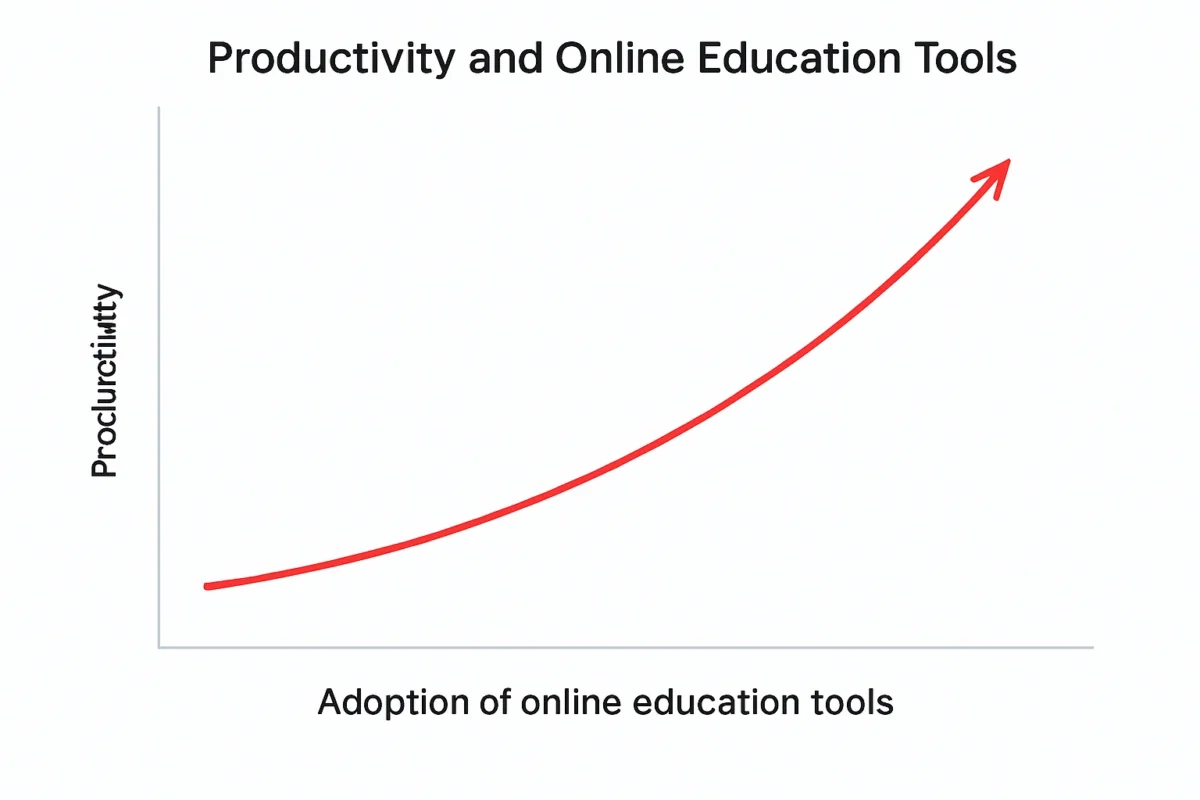
Implementing an e-learning strategy is a direct investment in your team’s efficiency and output.
Enable Just-in-Time Learning
Instead of waiting for a formal training session, an employee stuck on a specific task (like creating a pivot table in Excel) can watch a 5-minute tutorial on their learning platform and solve the problem instantly. This “just-in-time” access to information dramatically reduces bottlenecks and keeps projects moving forward.
Standardize Knowledge and Reduce Errors
When training is ad-hoc, knowledge varies from person to person, leading to inconsistent work and repeated mistakes. A centralized learning platform ensures everyone is trained on the same processes and best practices, leading to higher quality and more uniform output across the team.
Boost Employee Engagement and Retention
A LinkedIn report found that 94% of employees would stay at a company longer if it invested in their learning and development. Providing access to high-quality online education tools shows employees you care about their growth, which boosts morale, engagement, and loyalty. Find more insights on career development at Infoinaja.
Core Features That Drive Productivity
The most effective platforms share these features designed to integrate learning seamlessly into the workday.
- Curated Learning Paths: The ability for managers to create and assign sequences of courses for specific roles (e.g., an onboarding path for new sales reps) or skills (e.g., a “Leadership 101” path for new managers).
- Bite-Sized and Mobile-Friendly Content: A focus on microlearning—short, easily digestible videos and articles—that employees can access on any device, making it easy to learn during a commute or coffee break.
- Advanced Search and Discovery: A powerful search function that allows employees to quickly find answers to specific questions, turning the platform into an on-demand knowledge base.
- Analytics and Reporting: Dashboards for managers to track team progress, identify skills gaps, and measure the impact of training initiatives.
Real-Life Use Case: Upskilling a Marketing Team with Udemy Business
Imagine a marketing team struggling to keep up with the latest digital advertising trends. Their campaign performance is stagnating. The manager decides to implement Udemy Business to address the skills gap.
The manager creates a custom learning path titled “Modern Digital Advertising,” assigning courses on Google Ads, social media marketing, and analytics. Team members can take these courses at their own pace. When a new ad campaign is launched, a team member can instantly search for and watch a 10-minute video on “A/B Testing Ad Copy,” applying the knowledge immediately. After three months, the manager uses the analytics dashboard to see that the team has completed the learning path, and campaign metrics show a 15% increase in conversion rates.
Udemy Business: Pros & Cons
- Pros: Massive, diverse course library, strong focus on practical/technical skills, intuitive admin and analytics tools, good value for the price.
- Cons: Course quality can vary since it’s a marketplace, fewer courses from prestigious university brands compared to Coursera.
Comparison: The Best E-Learning Platforms for Business
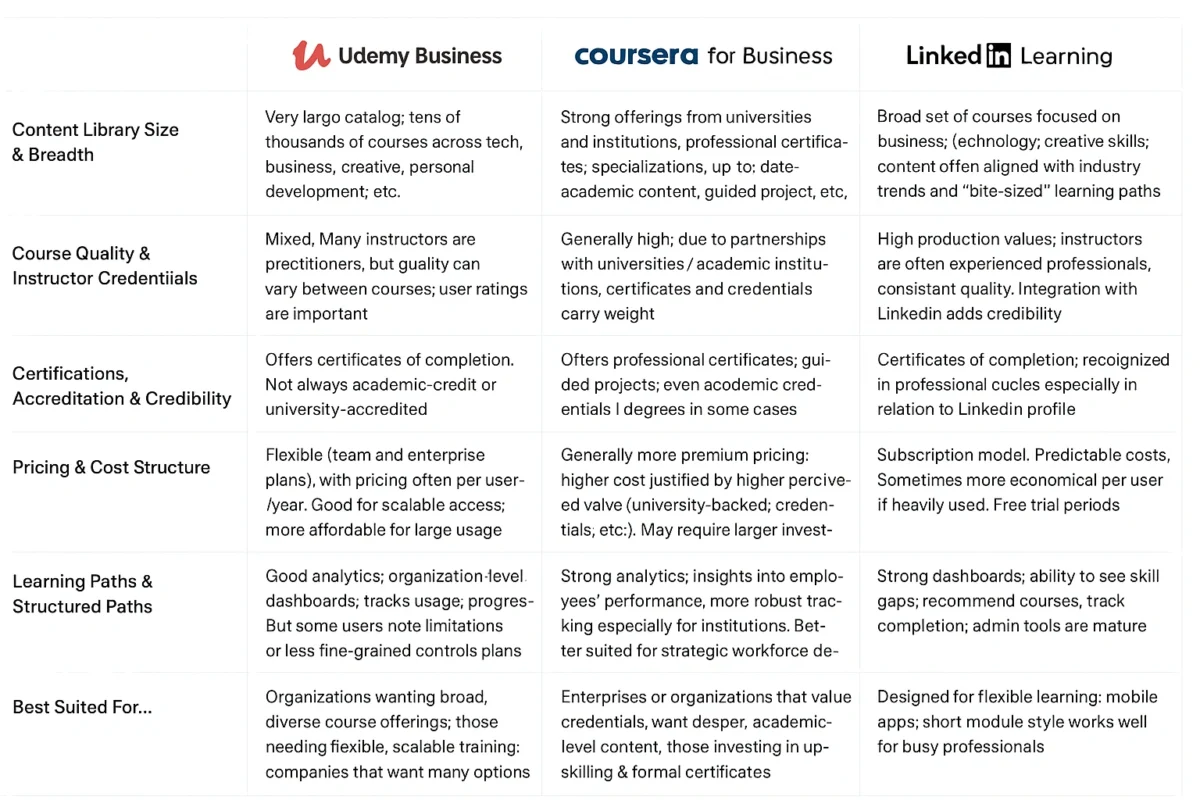
Choosing the right e-learning platforms depends on your company’s specific needs. The best e-learning platforms can scale with your team, offering customized courses and training paths. By exploring different e-learning platforms, you can select the tools that align with your goals and company culture. Leveraging effective e-learning platforms ensures your workforce gains relevant skills efficiently, making training more impactful and measurable.
| Platform | Key Features | Best For |
|---|---|---|
| LinkedIn Learning | High-quality video production, expert instructors, strong focus on soft skills and business acumen. | Companies focused on developing leadership, communication, and other professional soft skills. |
| Udemy Business | Vast library of 25,000+ courses, strong in technical skills (coding, IT), custom learning paths. | Tech-focused companies or teams that need access to a wide variety of practical, up-to-date technical skills. |
| Coursera for Business | Courses from top universities and companies (Google, IBM), in-depth specializations, verifiable certificates. | Organizations that need deep, structured learning paths and highly credible, university-backed credentials for their employees. |
Common Mistakes in Implementing E-Learning
- No Clear Strategy: Simply giving employees access to a library of courses without clear goals or guidance on what they should learn.
- Ignoring User Experience: Choosing a platform that is clunky, hard to navigate, or not mobile-friendly, which discourages adoption.
- Lack of Manager Buy-In: If managers don’t actively encourage and make time for learning, employees won’t see it as a priority.
- One-Size-Fits-All Approach: Assigning the same training to everyone, regardless of their role, skill level, or career aspirations.
- “Set It and Forget It” Mentality: Failing to regularly promote new courses, analyze usage data, and gather feedback to optimize the program.
Expert Tips & Best Practices for Success
- Integrate Learning into Workflows: Connect the learning platform to your company’s communication tools (like Slack or Teams) to recommend relevant courses based on ongoing projects.
- Promote Social Learning: Encourage teams to take courses together and create channels for discussing what they’ve learned.
- Recognize and Reward Learning: Publicly acknowledge employees who complete significant training or earn new certifications.
- Start with a Pilot Program: Roll out the platform to a single department first to gather feedback and work out any kinks before a company-wide launch.
“Don’t treat e-learning as a perk; treat it as a core business tool. The most productive companies are the ones where learning isn’t an event, but a continuous, integrated part of the daily workflow,” says a senior analyst from TechCrunch.
Frequently Asked Questions (FAQ)
Q: How can e-learning platforms directly improve team productivity?
A: E-learning platforms improve productivity by providing ‘just-in-time’ learning, allowing employees to quickly find answers and learn new skills exactly when they need them. This reduces downtime spent searching for information. They also standardize training, ensuring everyone has a consistent knowledge base, which leads to fewer errors and more efficient workflows.
Q: What is ‘microlearning’ and why is it effective?
A: Microlearning involves consuming small, bite-sized chunks of educational content (e.g., a 5-minute video or a short quiz). It’s effective because it fits easily into a busy workday, combats the short attention spans of modern learners, and improves knowledge retention by focusing on one specific topic at a time.
Q: What’s the difference between a learning platform for individuals and one for businesses?
A: Business or enterprise versions of e-learning platforms (like Udemy Business or Coursera for Business) include administrative features. These allow managers to assign courses, create custom learning paths for teams, and track employee progress and completion rates through analytics dashboards.
Q: How do we measure the ROI of implementing an e-learning platform?
A: The ROI of e-learning can be measured through various metrics. These include tracking improvements in key performance indicators (KPIs) like sales numbers or project completion times, monitoring employee performance reviews, and measuring employee engagement and retention rates. Many platforms also offer analytics to show skill development over time.
Q: Are there any good free online education tools for small teams?
A: While most comprehensive business platforms are paid, small teams can leverage free resources effectively. This includes using curated YouTube playlists, free courses on platforms like Khan Academy, and encouraging team members to explore the free ‘audit’ tracks on edX and Coursera for specific knowledge areas.
Conclusion
Investing in e-learning platforms is no longer a luxury but a strategic necessity for businesses aiming to stay competitive. By closing knowledge gaps, standardizing processes, and fostering a culture of continuous learning, these powerful online education tools directly translate into increased productivity and innovation. The key is to move beyond simply providing access and instead build a deliberate strategy that aligns learning with tangible business outcomes. By choosing the right platform and integrating it into your team’s daily rhythm, you can unlock a more skilled, engaged, and ultimately more productive workforce. To explore more about the future of work and corporate training, visit authoritative sources like Wired.