
Introduction
What Are Remote Learning Strategies for Professionals?
Remote learning strategies for professionals are a specific set of intentional practices and systems designed to integrate continuing education into an already demanding work and life schedule. This goes far beyond simply enrolling in a course and “trying to keep up.” It involves a conscious approach to time management, communication, and learning application that is fundamentally different from that of a traditional student. It’s about leveraging tools and techniques to learn smarter, not harder. For a working professional, a successful strategy means being able to complete a course without their job performance suffering or their personal life imploding. It’s the framework that makes lifelong learning not just possible, but a powerful and sustainable driver of career growth.

Why a Strategic Approach is Non-Negotiable
It Transforms Learning from a “Cost” to an “Investment”
Without a strategy, studying feels like a time cost that’s stolen from work or family. With a strategy, it becomes a high-yield investment. By immediately applying what you learn to your job, you can generate tangible results—like improving a workflow or contributing to a new project—that showcase your value and provide a direct return on your educational investment.
It Prevents Burnout and Protects Your Well-Being
A clear plan with dedicated, scheduled time for learning, work, and rest creates boundaries. This is the antidote to the chronic stress and burnout that comes from feeling like you should always be “on.” A good strategy protects your personal time, ensuring that upskilling energizes your career, rather than draining your life force.
It Demonstrates High-Value Professional Skills
Successfully balancing a full-time job with further education is a powerful demonstration of skills that employers covet: time management, self-discipline, and a commitment to growth. This narrative becomes a compelling part of your personal brand. For more on building your brand, explore our guide to personal branding statements.
The 5 Pillars of a Successful Work-Study Balance
Your success will be built on these five foundational pillars. Implement them before you even start your first module.
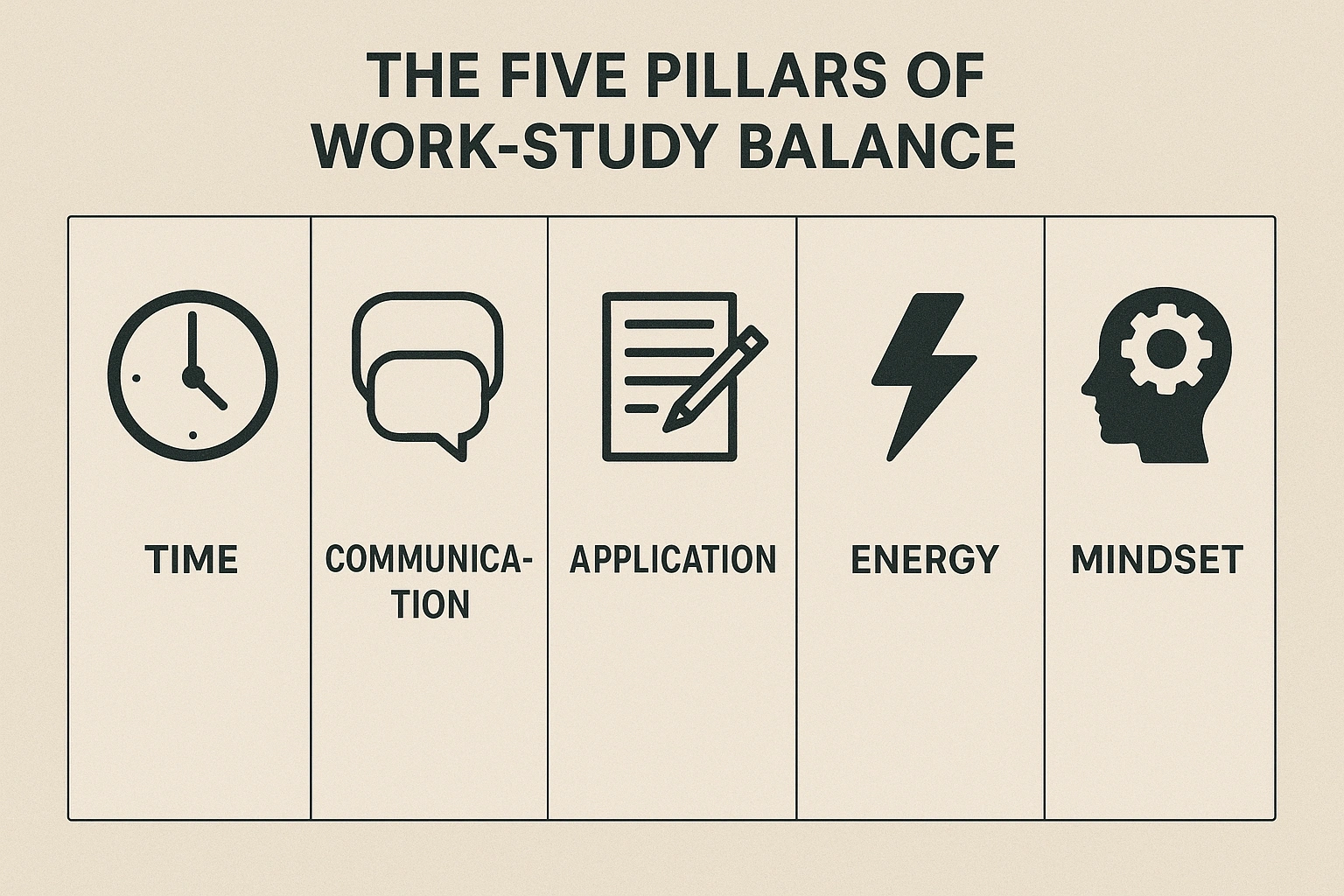
Pillar 1: Master Your Calendar with Time Blocking
“Finding time” is a myth. You must *make* time.
- Conduct a Time Audit: For one week, track where your time actually goes. You’ll likely find pockets of low-value time (like mindless scrolling) that can be repurposed.
- Schedule Everything: Use a digital calendar to block out everything—work meetings, project deadlines, family time, and most importantly, non-negotiable “study blocks.” Even a 45-minute block every morning is powerful when done consistently.
Pillar 2: Proactive Communication with Your Ecosystem
You cannot do this in a vacuum. Your success depends on the support of those around you.
- Talk to Your Manager: Frame your learning as a benefit to the company. Explain how the new skills will help you in your role. This can lead to official support and even financial sponsorship.
- Set Expectations at Home: Communicate your study schedule to your family or roommates. Setting boundaries like, “I’ll be unavailable from 7 PM to 8 PM on Tuesdays and Thursdays,” prevents interruptions and resentment.
Pillar 3: The “Learn-Apply” Loop
For professionals, the most effective learning is applied learning.
- Create a “Work Project” Parallel: As you learn a new concept, immediately think about how you can apply it to a project at your current job. This not only reinforces the knowledge but also demonstrates your value at work.
- Adopt “Just-in-Time” Learning: Focus your energy on the course modules that are most relevant to the challenges you are facing at work *right now*.
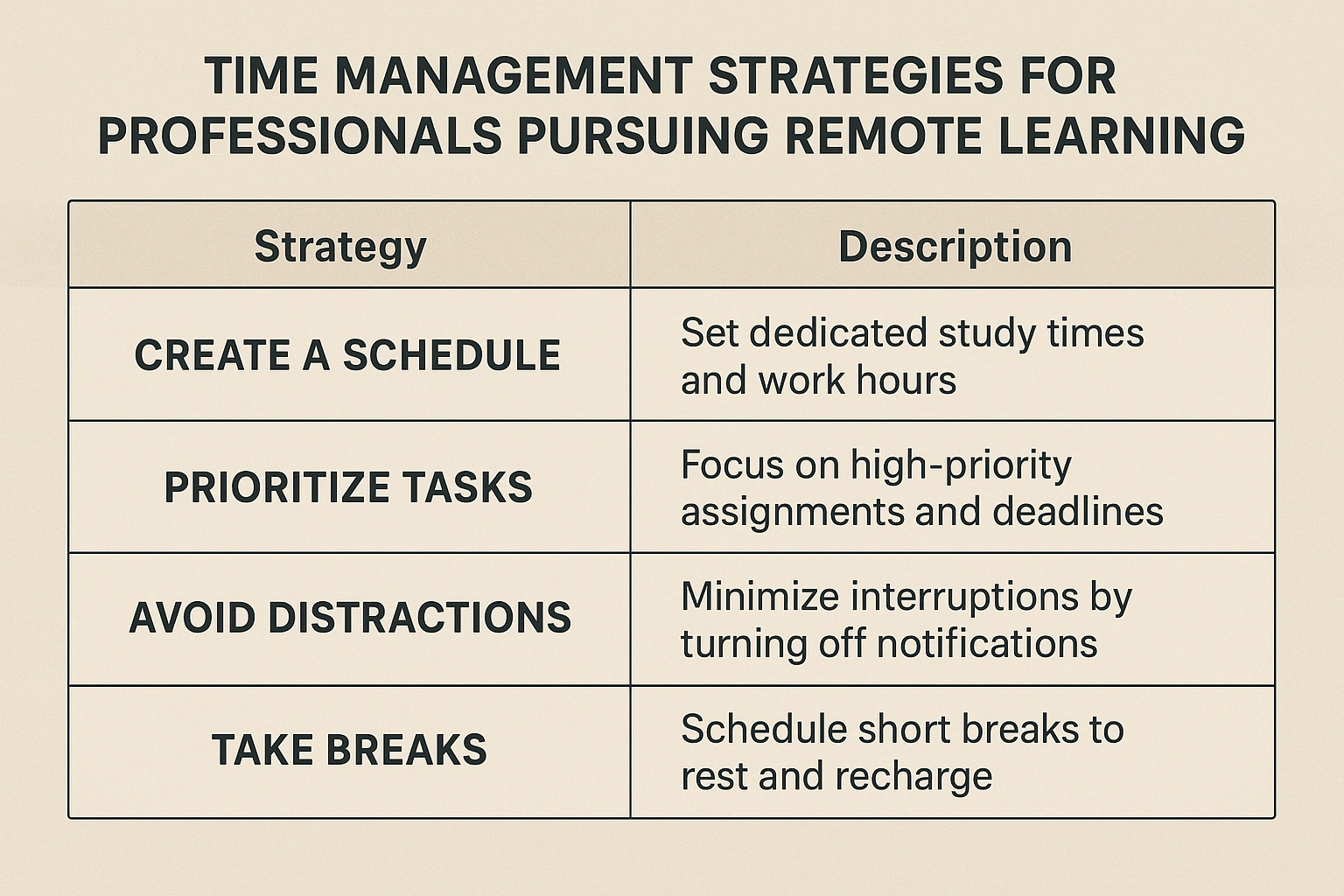
Comparison: Time Management Techniques for Professionals
Your most valuable resource is time. Choose a management technique that fits your workflow.
| Technique | Core Principle | Best For |
|---|---|---|
| Time Blocking | Scheduling your entire day into specific blocks for specific tasks. | Professionals who need a high degree of structure to manage multiple competing priorities. |
| Micro-Learning | Breaking learning into small, 5-15 minute sessions. | Busy professionals who can leverage small pockets of time, like a commute or a lunch break. |
| Themed Days | Dedicating specific days of the week to specific focuses (e.g., “Deep Work Wednesdays,” “Study Saturdays”). | Professionals with flexible schedules who can dedicate larger, uninterrupted blocks of time on certain days. |
Common Mistakes That Derail Working Learners
- The “Binge and Purge” Approach: Ignoring your course all week and then trying to cram 10 hours of study into a Sunday afternoon. This leads to exhaustion and poor knowledge retention.
- Sacrificing Sleep: Consistently sacrificing sleep to study is the fastest route to burnout. A tired brain cannot learn effectively.
- Perfectionism Paralysis: Feeling like you have to perfectly understand every concept before moving on. For professionals, the goal is often competency and application, not 100% mastery on the first pass.
Expert Tips & Best Practices
- “Stack” Your Learning: Find opportunities to stack learning with existing habits. Listen to a lecture recording during your commute or while doing chores. Review flashcards while waiting in line for coffee.
- Front-Load the Work: If possible, dedicate more time to the course in the first two weeks. This helps you build early momentum and get ahead before your motivation naturally wanes.
- Schedule “Zero Days”: Intentionally schedule one or two days a week where you do absolutely no studying. This guilt-free rest is essential for preventing burnout and maintaining long-term consistency.
“The professionals who succeed at lifelong learning are not the ones with the most free time. They are the ones who are most skilled at integrating learning into the time they already have. It’s a skill of integration, not addition,” says a corporate learning strategist.
Frequently Asked Questions (FAQ)
Q: Is it realistic to study while working full-time?
A: Yes, it is absolutely realistic, but it requires a strategic approach. It’s not about finding more time, but about managing the time you have more effectively. Success depends on clear goals, disciplined scheduling (like time blocking), and strong communication with your support system at work and home.
Q: How many hours a week should I dedicate to studying?
A: This depends on the course, but a sustainable goal for most professionals is between 5 to 10 hours per week. It’s more effective to schedule five one-hour sessions throughout the week than to try and cram 5 hours into a Saturday. Consistency is more important than intensity.
Q: Should I tell my boss that I’m taking an online course?
A: In most cases, yes. Frame the conversation around how the new skills will benefit the company. This transparency can lead to support, potential financial sponsorship, and opportunities to apply what you’re learning in your current role, which reinforces your learning.
Q: What is the best way to catch up if I fall behind?
A: If you fall behind, don’t panic or try to cram everything at once. First, review your schedule and identify one or two extra study blocks you can add in the coming week. Focus on the most critical upcoming deadlines or foundational concepts you missed. It’s better to understand one key topic well than to rush through three.
Q: How do I choose a course that won’t overwhelm me?
A: Look for courses designed for working professionals. Check for features like self-paced learning, a flexible schedule, and a clear, manageable time commitment listed in the course description. Start with a smaller, more focused course to build your confidence and work-study habits before committing to a larger, more intensive program World Economic Forum.
Conclusion
Successfully combining remote learning with a full-time job is the ultimate professional power move of the modern era. Managing remote learning with work responsibilities requires strategy, discipline, and intentional planning to avoid burnout. By implementing the remote learning with techniques laid out in this guide, you can move from feeling overwhelmed to feeling in control of both your career and your studies. Achieving balance through remote learning with clear schedules, defined priorities, and effective communication is not a magical outcome; it’s the result of consistent execution. Investing in upskilling through remote learning with purpose ensures your professional growth and future relevance. Build your system, protect your energy, and take the next step in your career with confidence.