Feeling overwhelmed by options? Choosing the right learning platform can simplify your journey and help you focus on the skills that truly matter. Our guide breaks down how to select a learning platform that aligns with your career growth goals and personal learning style. By engaging with a learning platform strategically, you can invest your time wisely and make meaningful progress. The right learning platform empowers you to build the skills needed for 2025 and beyond, turning options into actionable steps for your career.
Introduction
The online learning market is booming, with thousands of courses promising to transform your career overnight. But with endless options from Coursera to Skillshare, how do you choose the right one? It’s easy to fall into the trap of ‘analysis paralysis’ or, worse, waste hundreds of hours on a course that doesn’t align with your goals. The secret to successful upskilling isn’t just learning; it’s learning with a strategy. Choosing the right learning platform is the critical first step towards meaningful professional development. This guide provides a simple yet powerful framework to help you cut through the noise, assess your unique needs, and select the perfect platform to fuel your career growth online and ensure your time and money are a wise investment in your future.
What Exactly is a Learning Platform in 2025?
A learning platform is an online environment designed to deliver educational content and facilitate skill development. In 2025, these platforms have evolved far beyond the simple video libraries of the past. They are now comprehensive ecosystems that can include everything from university-level courses and professional certifications to project-based creative workshops and interactive coding sandboxes. With the global e-learning market size continuing to explode, these platforms are the new frontier of personal and professional education. They offer a flexible, accessible, and often more affordable alternative to traditional schooling, empowering individuals to take direct control of their career growth online by learning in-demand skills on their own terms.

Why a Strategic Choice Matters More Than Ever
Jumping onto the trendiest platform without a plan can be a costly mistake. A deliberate choice ensures your efforts translate into tangible career results.

Align Learning with Real Career Goals
A course on Python from a data science-focused platform is more valuable for an aspiring analyst than a generalist one. Choosing a platform that specializes in your target industry ensures the curriculum is relevant, up-to-date, and recognized by employers in that field.
Maximize Your Return on Investment (Time & Money)
Your time is your most valuable asset. The right platform offers a learning style that suits you (e.g., project-based vs. academic), keeping you engaged and motivated to finish. This prevents you from wasting money on abandoned subscriptions or courses that weren’t a good fit.
Build Job-Ready Skills, Not Just Theoretical Knowledge
The goal is not just to learn, but to be able to *do*. The right platform will emphasize hands-on projects, case studies, and practical applications that allow you to build a portfolio and confidently demonstrate your new abilities in a job interview. For more career strategies, visit Infoinaja.
How to Choose: A Simple 4-Step Framework
Follow these four steps to find the learning platform that’s perfectly suited to you.
Step 1: Define Your Primary Goal
Be brutally honest about what you want to achieve. Are you aiming for a career change into a new field, seeking a promotion by upskilling, or simply exploring a hobby? Your goal dictates the type and depth of the platform you need. A career changer needs a structured, comprehensive curriculum, while a hobbyist might prefer a more flexible, project-based platform.
Step 2: Assess Your Learning Style
How do you learn best? Are you an academic learner who thrives on lectures, readings, and quizzes (like on Coursera or edX)? Or are you a hands-on learner who needs to build things to understand them (like on Skillshare or specialized bootcamps)? Choosing a platform that matches your style is the key to staying engaged.
Step 3: Evaluate the Logistics (Budget and Time)
Determine your budget. Are you looking for free resources, an affordable monthly subscription, or are you willing to invest a larger sum for a high-impact certificate? Also, consider your time commitment. Can you dedicate 10+ hours a week for an intensive program, or do you need bite-sized lessons you can fit into a busy schedule?
Step 4: Research and Test
Once you’ve narrowed down your options, dive deep. Read recent reviews, check the instructors’ backgrounds, and most importantly, take advantage of free trials or free introductory courses. This is the best way to get a feel for the platform’s interface, teaching quality, and community before you commit.
Real-Life Use Case: Sarah’s Career Change
Let’s see how this framework works in practice. Sarah was a marketing coordinator who wanted to transition into UX Design. Initially, she subscribed to a generalist platform but felt overwhelmed by the sheer number of disconnected courses.
Using the framework, she reassessed:
- Goal: Complete career change, needing a portfolio.
- Learning Style: Hands-on, project-based.
- Logistics: Could dedicate 8-10 hours a week and had a moderate budget.
This clarity led her away from generalist platforms towards specialized UX design programs like the Google UX Design Certificate on Coursera. The structured, project-oriented curriculum allowed her to build a job-ready portfolio, and she successfully landed a junior UX role within six months of completion.
The Strategic Approach: Pros & Cons
- Pros: Prevents wasted time and money, leads to a clear and actionable learning path, builds confidence, results in job-ready skills and portfolio.
- Cons: Requires upfront self-reflection and research, may lead to choosing a more expensive, specialized platform over cheaper, generalist ones.
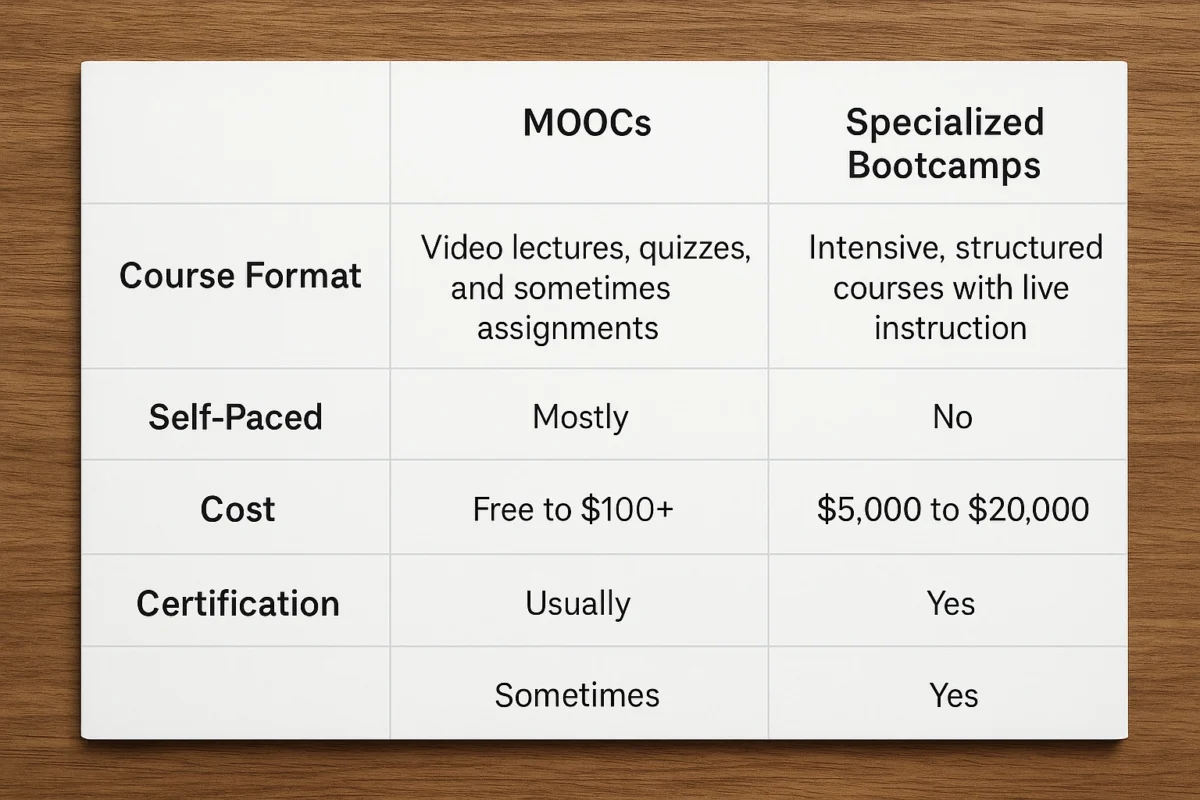
Comparison: Types of Learning Platforms
Understanding the main categories of platforms will help you narrow your search.
| Platform Type | Example Platforms | Best For |
|---|---|---|
| University MOOCs | Coursera, edX | Academic learners, career changers needing recognized certificates, in-depth knowledge. |
| Skill Marketplaces | Udemy, Skillshare | Learning specific, practical skills on a budget; hobbyists; creative, project-based learning. |
| Professional Development | LinkedIn Learning | Upskilling in your current role, developing soft skills, bite-sized learning for busy professionals. |
Common Mistakes to Avoid When Choosing a Platform
- Choosing Based on Hype: Don’t sign up for a data science bootcamp just because it’s trendy if you have no genuine interest in the field.
- Ignoring Course Reviews: Never enroll in a course without reading recent, detailed reviews. Look for feedback on the instructor’s teaching style, the relevance of the content, and the quality of support.
- Forgetting About Practical Application: A platform that only offers video lectures without projects or exercises will leave you with knowledge but no applicable skills.
- The “Subscription Trap”: Signing up for a yearly subscription to “save money” without a clear plan can lead to paying for a service you barely use. Start monthly if you’re unsure.
- Overlooking Community Features: A platform with an active and supportive community can be invaluable for getting help when you’re stuck and staying motivated.
Expert Tips & Best Practices for Success
- Start with the End in Mind: Before you browse any platform, find 5 job descriptions for the role you want. Identify the key skills and certifications they require. Let this list guide your search.
- Audit Courses for Free: Many platforms like Coursera and edX allow you to “audit” a course for free. This gives you access to the lecture content so you can vet the quality before paying for the certificate and assignments.
- Check for Employer Sponsorship: Many companies offer free access to learning platforms like LinkedIn Learning or Udemy Business as an employee benefit. Check with your HR department before you pay out of pocket.
“The most effective learners don’t just pick a course; they pick a complete learning ecosystem. They choose a platform that aligns with their goals, offers a supportive community, and provides tangible projects to build their professional credibility,” says career coach Jane Evans.
Frequently Asked Questions (FAQ)
Q: How do I know if a certificate from a learning platform is valuable?
A: The value of a certificate depends on the reputation of the platform and the issuing institution (e.g., Google, IBM, or a university via Coursera/edX). Look for ‘Professional Certificate’ programs designed for job-readiness and check if they are recognized in your industry by looking at job descriptions or professional forums.
Q: Is it better to pay for a subscription or per course?
A: A subscription (like Coursera Plus or LinkedIn Learning) is more cost-effective if you plan to take multiple courses throughout the year. Paying per course (like on Udemy) is better if you only need to learn one specific skill or want to own lifetime access to that single course.
Q: What is the best type of learning platform for a complete career change?
A: For a complete career change, look for platforms that offer structured ‘Career Paths’ or ‘Professional Certificate’ programs. Coursera and edX are excellent for this, as their programs are often designed with industry partners to make you job-ready. More intensive, specialized bootcamps are also an option if you have the time and budget.
Q: How can I make sure I choose a high-quality course on any platform?
A: Always check recent reviews, look at the instructor’s credentials and experience, and preview the course curriculum and any introductory videos. A high number of enrollments and positive, detailed reviews are good indicators of quality.
Q: Which learning platform is best for developing soft skills?
A: LinkedIn Learning is arguably the best platform for soft skills like leadership, communication, and time management. Its courses are taught by industry experts and are designed for professional development. Coursera also offers excellent soft skill courses from top universities.
Conclusion
In the modern workforce, continuous learning is not optional—it’s essential for survival and growth. Choosing the right learning platform can make all the difference in turning effort into tangible progress. Simply being busy with courses on any learning platform is not enough; the key is to engage strategically with a learning platform that suits your career goals, learning style, and schedule. By selecting the best learning platform for your needs, you transform online education from a passive activity into a powerful tool for career advancement. Stop wondering and start planning—your next opportunity is waiting for you to take full advantage of the learning platforms available. For more insights on workforce trends, explore resources from organizations like Statista.