
Unlock the secrets to acing your next behavioral interview by understanding the key techniques that make a behavioral interview successful. Our expert guide provides top strategies for handling behavioral interview questions, tips to prepare effectively for any behavioral interview scenario, and practical advice to build confidence during a behavioral interview.
Introduction
“Tell me about a time when…” If those five words send a shiver down your spine, you’re not alone. The modern hiring landscape has decisively shifted from traditional questions to a more forensic examination through a behavioral interview. Did you know that over 75% of companies, from startups to Fortune 500 giants, now use behavioral interview questions to screen candidates? Acing a behavioral interview is no longer just a good idea—it’s the critical final hurdle between you and your dream job. This comprehensive guide will demystify the behavioral interview process, teach you the powerful STAR method for storytelling, and give you the confidence to turn your past experiences into your most compelling asset for any behavioral interview.
What is a Behavioral Interview?
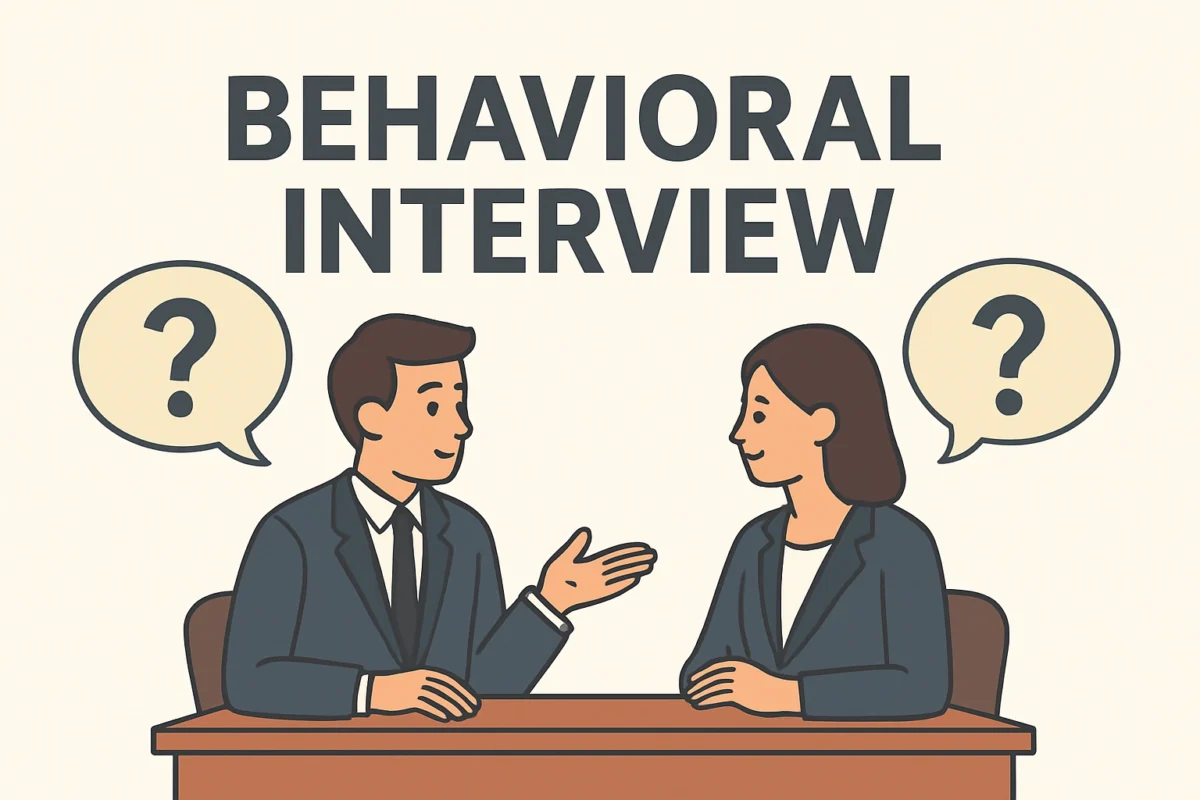
A behavioral interview is a structured interview technique based on the simple yet profound principle that past performance is the best predictor of future behavior. Instead of asking what you *would* do in a hypothetical situation, interviewers will ask you to provide specific, real-world examples of how you *have* handled various situations in the past. They’re digging for evidence.
In 2025, companies are leaning heavily on this method to assess crucial soft skills like teamwork, problem-solving, leadership, and conflict resolution—skills that are incredibly difficult to gauge from a resume alone. A landmark study from the Society for Human Resource Management (SHRM) found that behavioral-based interviewing leads to more effective and accurate hiring decisions. This isn’t a fleeting trend; it’s a foundational shift in how companies identify top talent, allowing them to gather concrete proof of your capabilities and how you operate under pressure.
Why Excelling at Behavioral Interviews Matters
Mastering these interviews gives you a significant competitive edge. In a sea of candidates with similar qualifications, your ability to articulate your experiences effectively is what will make you stand out. Here’s a deeper look at why it’s so important:
It Provides Concrete Proof of Your Skills
Anyone can list “great team player” or “proactive problem-solver” on their resume. Those are just claims. A behavioral answer forces you to back up that claim with a real story. When you describe a specific situation where you successfully mediated a team conflict, you are not just telling; you are showing. This transforms your skills from abstract concepts into tangible, credible assets in the interviewer’s mind.
It Demonstrates Your Soft Skills
According to a recent LinkedIn survey, 92% of hiring managers say soft skills matter as much or more than hard skills. Technical abilities can often be taught on the job, but traits like communication, adaptability, and emotional intelligence are much harder to develop. A strong performance in a behavioral interview is your prime opportunity to showcase these in-demand qualities through your past actions.
It Shows You’re a Good Cultural Fit
The way you handle past conflicts, collaborate with teams, and take initiative gives recruiters deep insight into your work style and personality. Do you take charge, or are you a consensus-builder? Do you thrive under pressure or prefer structured environments? Your stories reveal these nuances, helping them determine not just if you *can* do the job, but if you will *thrive* in their specific company culture. For more evergreen career advice, check out the resources at Infoinaja.
The STAR Method: Your Framework for Success
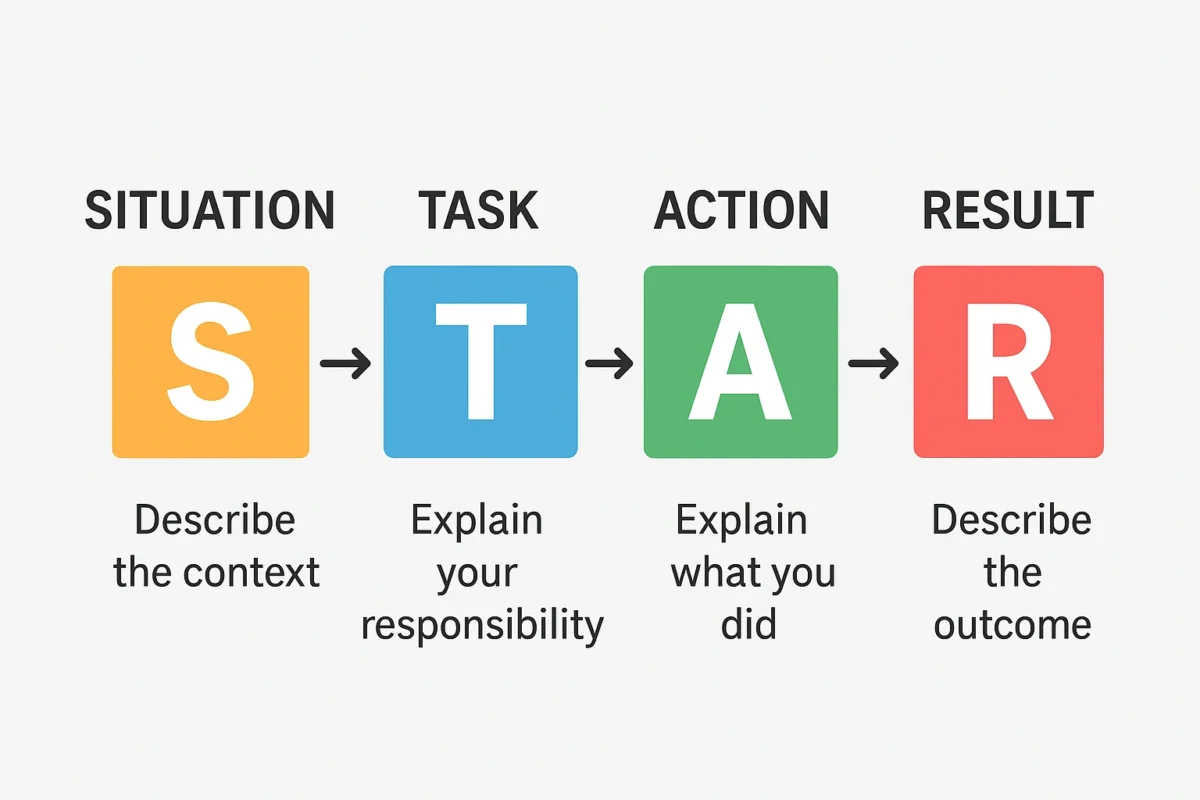
The single most effective tool in your interview preparation tips toolkit is the STAR method. It’s a simple, memorable acronym that provides a clear structure for telling a compelling and complete story.
Briefly set the scene and provide the context. Think of this as the opening of your story. Aim for 1-2 sentences. (Who was involved? What was the project? Where and when did it happen?)
Describe your specific responsibility or the goal you were trying to achieve. This clarifies the challenge or objective. (What was the problem you needed to solve? What was the target?)
Explain the specific steps *you* took to address the situation. This should be the most detailed part of your answer. Use “I” statements and focus on your individual contributions, even if it was a team effort.
Share the outcome of your actions. This is your punchline. Quantify your success with numbers, data, or specific, positive feedback whenever possible. (How did you save money? By how much did you increase efficiency? What was the measurable outcome?)
Common Categories of Behavioral Questions
Behavioral questions are designed to probe specific competencies. By preparing stories that fit into these common categories, you can ensure you’re ready for almost anything they throw at you.

Teamwork & Collaboration
Interviewers want to know if you can work effectively with others.
Examples: “Tell me about a time you had a conflict with a coworker.” “Describe a successful team project you were part of.”
Problem-Solving & Analytical Skills
This tests your ability to handle unexpected challenges and think critically.
Examples: “Describe a situation where you had to solve a difficult problem.” “Walk me through a time you used data to make a decision.”
Leadership & Initiative
Even for non-management roles, they want to see if you are proactive.
Examples: “Tell me about a time you took the lead on a project.” “Describe a situation where you went above and beyond your role’s expectations.”
Adaptability & Handling Change
This shows how you react to shifting priorities or unexpected changes.
Examples: “Tell me about a time a project’s priorities changed suddenly.” “Describe a time you had to learn a new skill quickly.”
Handling Failure & Mistakes
This assesses your self-awareness, resilience, and ability to learn.
Examples: “Tell me about a time you made a mistake at work.” “Describe a project that failed and what you learned from it.”
Good vs. Bad Behavioral Answers: A Comparison
The difference between a weak answer and a strong, STAR-driven answer is night and day. Here’s a look at how to transform a vague response into a powerful one.
| Question | Weak Answer (Vague) | Strong Answer (STAR Method) |
|---|---|---|
| Tell me about a time you worked on a team. | “Yeah, I’m a great team player. In my last job, we had to work together on projects all the time and I always did my part to help the team succeed.” | “(S) In my last role, my three-person team was tasked with launching a new feature under a tight deadline. (T) My specific task was to write the user documentation, but we realized our QA tester was overwhelmed. (A) I finished my primary task early and then volunteered to help with manual testing, creating test cases and documenting bugs. (R) As a result, we caught three critical bugs and launched on time with zero post-launch issues. My manager praised my initiative in the next team meeting.” |
| Describe a time you dealt with a difficult customer. | “Oh, that happens sometimes. I just try to stay calm and help them out. I’m good with customers.” | “(S) A long-term client was very unhappy with a recent software update that changed a key workflow they relied on. They were frustrated and threatening to cancel their contract. (T) My goal was to retain the client by addressing their concerns and finding a viable solution. (A) I scheduled an immediate video call, listened actively to their frustrations without being defensive, and acknowledged the disruption. I then worked with our product team to create a custom guide for their new workflow and identified a little-known feature that could replicate their old process. (R) The client was so grateful for the personalized support that they not only renewed their contract but also agreed to be a case study for our customer success team.” |
Common Mistakes to Avoid in a Behavioral Interview
- Being Too Vague: Failing to provide specific details. This is the #1 mistake. An answer without specifics is just an empty claim.
- Not Quantifying Results: You miss a huge opportunity to show the impact of your actions. Saying you “improved efficiency” is weak; saying you “implemented a new process that reduced report generation time by 20%” is powerful.
- Using “We” Instead of “I”: While teamwork is great, the interviewer is hiring *you*. They need to know what *your* specific contribution was. It’s crucial to own your actions.
- Taking Too Long to Answer: Rambling stories lose impact. Keep your STAR answers concise and focused, ideally under two minutes. Practice timing yourself.
- Not Preparing Stories in Advance: Trying to think of a perfect example on the spot is incredibly difficult under pressure. This often leads to long, awkward pauses or weak examples.
- Choosing a Poor Example: Avoid stories where you come across as negative, arrogant, or where you broke company policy, even if the outcome was good.
Expert Tips & Best Practices
- Create a “Story Bank”: Before any interview, spend an hour reviewing your resume and identifying 5-7 significant achievements or challenges. Write each one out using the STAR format. This becomes your “Story Bank” that you can pull from during the interview.
- Align Stories with the Job Description: Scrutinize the job description for key required skills (e.g., “leadership,” “data analysis,” “client management”). Make sure your Story Bank contains examples that directly demonstrate those specific abilities.
- Practice, Don’t Memorize: Rehearse telling your stories out loud to a friend, family member, or even your pet. The goal is to internalize the key points so you can tell the story conversationally, not to memorize a script.
- End on a High Note: After stating the Result, you can add a final sentence that summarizes what you learned or how the experience shaped your skills. For example, “…and that experience taught me the importance of proactive communication.”
- Have a Versatile “Failure” Story Ready: You will almost certainly be asked about a mistake or failure. Prepare a good one that shows self-awareness, accountability, and a lesson learned.
“The biggest mistake candidates make in a behavioral interview is describing a situation without detailing their specific actions. The ‘A’ in STAR is where you prove your value,” says senior recruiter Jane Doe.
Frequently Asked Questions (FAQ)
Q: What is the main goal of a behavioral interview?
A: The main goal is to predict your future performance by examining your past behavior. Interviewers want to see concrete evidence of your skills in action, not just hear you talk about them.
Q: How many stories should I prepare for a behavioral interview?
A: Aim to have 5-7 solid, versatile stories prepared. Each story, framed using the STAR method, can often be adapted to answer several different types of questions (e.g., a story about a team project could demonstrate teamwork, problem-solving, and leadership).
Q: Is it okay to talk about a failure or mistake?
A: Yes, absolutely. Questions about failure are designed to test self-awareness and your ability to learn. Choose a real but not catastrophic mistake, and focus heavily on what you learned and how you improved as a result.
Q: What if I don’t have a specific work experience for a question?
A: It’s acceptable to draw from academic projects, volunteer work, or even complex personal projects, especially if you are early in your career. The key is to demonstrate the desired skill, regardless of the context.
Q: How can I make my answers sound natural and not rehearsed?
A: Practice telling your stories, don’t memorize them word-for-word. Focus on remembering the key bullet points of the Situation, Task, Action, and Result. This allows you to tell the story conversationally while still hitting all the important details.
Q: What is a red flag for interviewers during a behavioral interview?
A: A major red flag is being unable to provide specific examples. Vague, generic answers suggest a lack of experience or preparation. Another is consistently blaming others or speaking negatively about past colleagues or employers when describing challenging situations.
Q: How do I answer a behavioral question if I’ve never been in that situation?
A: Honesty is key. Acknowledge that you haven’t faced that exact scenario. Then, pivot by discussing a similar situation or explaining theoretically how you would handle it based on your skills and knowledge. For example, ‘I haven’t faced that exact conflict, but I did have to manage a disagreement on a team project where I…’ This shows problem-solving ability even without a direct match.
Conclusion
A behavioral interview is your ultimate opportunity to bring your resume to life and provide irrefutable proof of your skills. By preparing compelling, evidence-based stories for a behavioral interview using the STAR method, you can confidently demonstrate your value and excel in any behavioral interview scenario. Practicing for behavioral interview questions ensures your examples are aligned with the role’s requirements and delivered smoothly. With these advanced behavioral interview preparation tips, you’ll be more than ready to impress any hiring manager and take the next big step in your career.